Why most Australian air purifier reviews are lying to you (and what I actually bought)
I spent $400 on a plastic box that sounded like a jet engine and did absolutely nothing for my asthma. This was back in December 2019, when Sydney looked like the surface of Mars and the bushfire smoke was so thick you could practically chew it. I was desperate. I went to a big-box retailer—I won’t name them, but their name rhymes with ‘Runnings’—and grabbed the last unit on the shelf. It was a generic brand, white, shiny, and completely useless. I sat it in my bedroom in Surry Hills, turned it on ‘Max,’ and watched as the little air quality light stayed stubbornly red for six hours. My throat still felt like I’d been eating charcoal. That was the moment I realized that most air purifier reviews in Australia are written by people who have never actually lived through a smoke event or shared a house with a shedding Kelpie.
The Dyson problem (I know you’re going to hate this)
I’m just going to say it: I think people who buy the $900 Dyson Purifier Cool models are basically paying a luxury tax for being bad at research. I know, I know. They look like something out of a sci-fi movie and the app is gorgeous. My sister has one and she swears by it. But if you actually look at the CADR (Clean Air Delivery Rate), they are surprisingly weak. What I mean is—actually, let me put it differently: you’re paying for a fan that happens to have a filter, rather than a machine designed to scrub the air. For $900, I want a machine that could clear a tear-gas canister in three minutes. The Dyson doesn’t do that. It’s quiet, sure. It’s pretty. But in terms of raw cubic meters of air moved through a HEPA filter? It’s mediocre. I’ve seen better performance from machines that cost half as much and look like 1990s office printers.
Total waste of money.
The numbers that actually matter when your house is 35 degrees

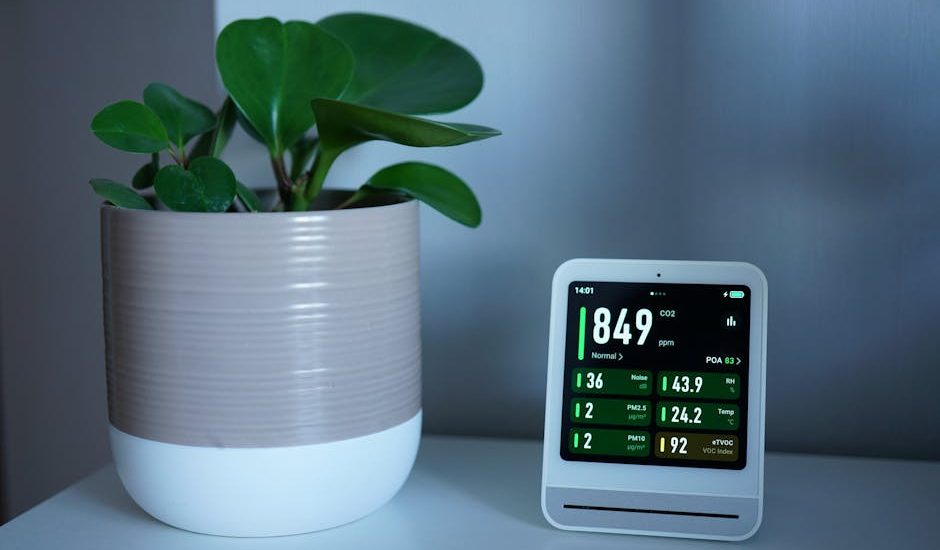
When you’re looking at reviews, everyone talks about HEPA. “It has a HEPA filter!” Cool. Everything has a HEPA filter now. Even the $50 ones from Kmart claim to have HEPA. What they don’t tell you is the seal. If the air can bypass the filter because the plastic housing is flimsy, the filter is just a decoration. I tested this—well, not scientifically, but I’m a nerd—and I used a Qingping air quality monitor to track PM2.5 levels in my lounge room last winter. I had a cheap Xiaomi unit and a Winix Zero 4-Stage running at different times. The Winix dropped the PM2.5 count from 32 to 2 in exactly 14 minutes. The Xiaomi took nearly forty minutes to get to the same level.
The secret isn’t the filter brand; it’s the CADR rating relative to your room size. If your lounge is 40sqm, don’t buy a machine rated for 20sqm. You’re just wasting electricity.
I used to think that the ‘PlasmaWave’ or ‘Ionizer’ settings were just marketing gimmicks. I was completely wrong. While I still think some of the health claims are a bit sketchy, the Winix version definitely helps with that stale ‘old house’ smell you get in those unrenovated inner-west terraces. Anyway, speaking of old houses, I once found a mummified rat behind my skirting board which probably explains why I needed an air purifier in the first place. But I digress.
The part nobody talks about: The filter tax
This is where they get you. You buy a unit for $300, and then six months later, the little ‘replace filter’ light starts blinking like a panicked heartbeat. You go online and find out a replacement filter costs $120. Over three years, you’ve spent more on filters than the machine. This is why I actively tell my friends to avoid Blueair. They are fantastic machines—probably some of the best in the world—but their filter replacement cost is a joke. It’s like buying a printer where the ink costs more than the gold.
I prefer the Winix or the Coway Mighty (the AP-1512HH). In Australia, you can usually find the Winix Zero for about $450-$500 if you catch a sale at Aus-Electronics or similar spots. The filters are around $90, but they actually last. I’ve run mine through a full pollen season and a dusty renovation, and the pre-filter caught so much crap it looked like a thick, grey wool sweater made of skin cells and disappointment. I just vacuumed it off and it kept going.
My genuinely unfair bias
I refuse to recommend Samsung air purifiers. I don’t care if the specs are good. I don’t care if they win Choice awards. They look like 1950s refrigerators that have been squashed. I have to look at this thing every day in my living room. If it looks like a piece of hospital equipment or a vintage icebox, it’s a no from me. It’s a completely irrational stance, but it’s mine. Also, their ‘Cube’ model is over $1,000. For a box. No thanks.
If you genuinely suffer from hay fever—the kind where your eyes feel like they’ve been rubbed with sandpaper—just get the Winix Zero 4-Stage. It’s not the sexiest machine. It doesn’t have a gold-plated remote. But it actually works when the North-Westerly winds start blowing dust across the Nullarbor.
Does it make a difference to my sleep? Honestly, I’m not sure. Some nights I think I breathe better, other nights I think it’s just the white noise helping me drown out the neighbor’s leaf blower. But seeing that grey dust on the filter every month is enough to keep me turning it on. If that stuff isn’t in the filter, it’s in my lungs.
Just buy the Winix.

Recent Comments