8 easy-care – but forgotten – shrubs for beautiful blossom
Do you have one of these forgotten shrubs in your garden?
Is there an out-of-control honeysuckle rambling over a fence or a blaze of yellow in a corner?
If so, you will have noticed three things. These forgotten shrubs are easy-care (which is why you find them in council car parks).
They have beautiful blossom in spring and/or interesting foliage.
And, with one or two exceptions, they offer a huge value to wildlife, because many offer nectar or pollen early in the year. There may be berries for birds and their evergreen foliage offers shelter.
Part of the problem with these shrubs is neglect or poor care. No wonder they look ugly if they are hacked down at the wrong time of year!
So I visited Hever Castle in Kent to talk to head gardener Neil Miller about some of the forgotten shrubs blazing with colour in Hever Castle’s gardens.
Hever Castle Gardens
Hever Castle is famous for being the home of Anne Boleyn, Henry VIII’s fated second wife. It’s also famous for its gardens.
In the early part of the twentieth century, American millionaires vied with each other to buy and restore old British castles. William Waldorf Astor bought Hever Castle and used his massive wealth to create an amazing garden. It has beautiful stone walls and paths, elaborate gates, arches, colonnades and statues. Every time you turn a corner there is a vista.
There are a series of events during the year, ranging from plays and exhibitions to A Celebration of Spring and then Autumn.
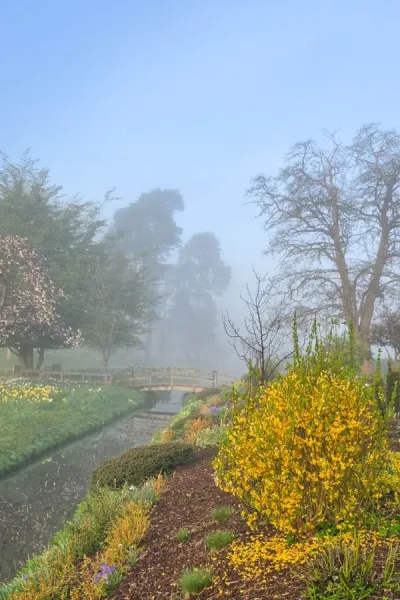
Forsythia – the most reviled of the forgotten shrubs!
It’s hard to find anyone with a good word to say about forsythia. But it is one of the earliest plants to flower, with a welcoming blaze of yellow.
Its value to wildlife is debated. It is certainly not the most wildlife friendly of the shrubs in this post because it has relatively little nectar or pollen. Some varieties are even sterile.
You often see it straggling up a wall, where it gets thick and ungainly.
Neil suggests treating it as a free-standing shrub. Prune and shape it as soon as the flowers are over. That is the only care it will need.
You will be rewarded the following spring. It has such a profusion of yellow flowers when most other plants are just brown twigs.
Laurel – more than just a hedge
My parents had a giant Portuguese laurel hedge around their garden. The leaves were a dark, shiny green, but I can’t remember it ever flowering.
That’s because when you trim a hedge repeatedly over the year, you usually prune off the flower buds.
But grow laurel as a standalone plant. Only cut it immediately after it has flowered.
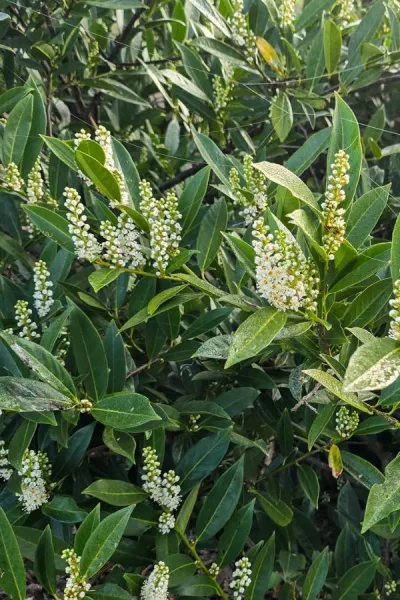
Then you will get racemes of white flowers in spring and berries later on in the year. Both are valuable to wildlife and the evergreen leaves offer shelter.
In some areas, laurel can be invasive and will self-seed, so check this where you are. Othewise laurel is another plant that virtually looks after itself.
Skimmia – one of the most popular forgotten shrubs
If you do hanging baskets or pots in winter, you won’t have forgotten about skimmia. It’s a key plant in 12 top plants for a brilliant winter container garden.
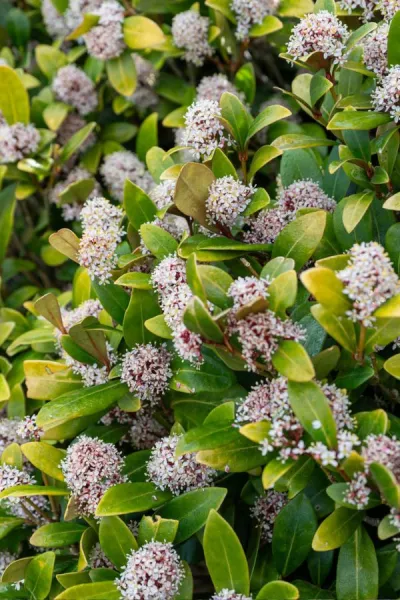
Skimmia flowers in spring are attractive to pollinators (as well as to human beings!). However, you do need a ‘husband’ for your skimmia if you want to get the bright red berries later on in the year.
Some varieties of skimmia are male and others are female, explains Neil. The female ones have berries once they’ve been pollinated by the male variety. So check your labels to make sure you get at least two plants. Plant them close together.
There were some stunning creamy skimmias at Hever Castle as well as the more usual pink ones.
Skimmia is so easy-care that you don’t even have to prune it! And it will be fine in shady spots, too.
Honeysuckle – a cottage garden favourite
Anyone who has had to fight through a tangle of honeysuckle foliage with a light smattering of flowers over the top will not want to grow honeysuckle again.
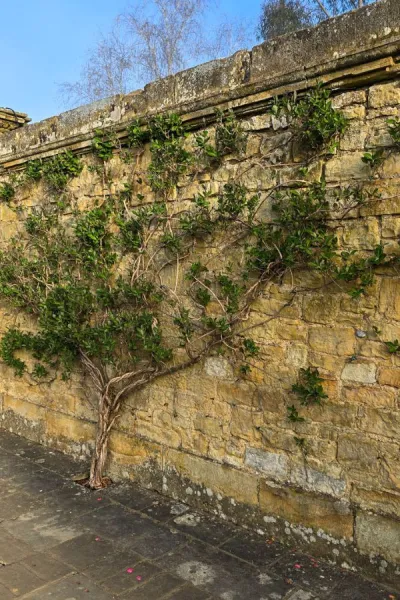
But honeysuckle can be trained to behave. At Hever Castle, it is trained onto the wall like a climbing rose. It’s not allowed to bulk out or get out of control.
‘Keep your honeysuckle pruned back and you’ll get more flowers,’ says Neil. These come in cream, pink, yellow, orange or gold and their fragrance is divine.
Some honeysuckles are invasive in some parts of the world, so check the variety when buying. There are several native honeysuckles for North America but others are native to Northern Europe and Asia.
Honeysuckle is a wonderful plant for pollinators and the berries are good for birds in autumn, too.
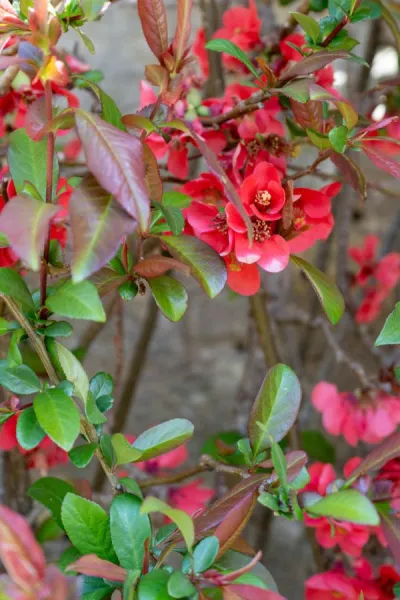
Ornamental quince/Chaenomeles – for old-fashioned charm and elegance
Ornamental quince (Chaenomeles) reminds me of my favourite traditional floral wallpapers and furnishing fabrics. It has an almost rose-like flower, but is out much earlier in the year.
This can be a free-standing shrub, but is seen grown up a wall as a climber at Hever Castle. There is even a variety named after the castle – ‘Chaenomeles ‘Hever Castle.’
Like many of the other forgotten shrubs, chaenomeles is a blaze of colour when it emerges. It can look as if a whole wall is on fire.
It’s perfect for pollinators and the fruits are also good for birds in autumn. Apart from the once-a-year pruning it needs little or no care.
Like it or loathe it – but you can’t ignore it. Personally, I think it is beautiful. Neil describes it as a ‘tough old cookie that you get a lot from!’
Azaleas and rhododendrons – in pots or acid soil
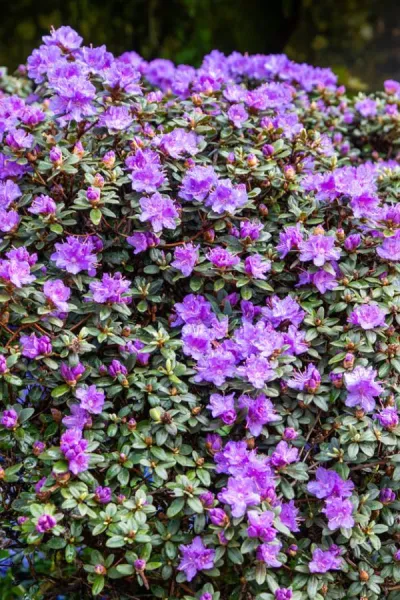
Azaleas and rhododendrons can be stunning plants but you do need acid soil to grow them well.
However, Neil says that azaleas grow well in pots. ‘They won’t grow so large,’ he adds. But that can be a good thing as some azaleas and rhododendrons can be too large for small and middle-sized gardens.
There are lots of varieties of azalea and rhododendron.
Sometimes azaleas will flower well in neutral soil. At Hever Castle there is a blue azalea that has been there for many years. Its name is long-forgotten, but apart from its annual trim, it needs very little care.
Mahonia/Oregon grape – more than just a car park shrub
Mahonia has spiky culptural leaves and vibrant yellow flowers. It flowers early – it’s often the first flower out, before the bulbs.
If the bees are out on an unexpectedly sunny day in winter, mahonia is their best chance of nectar and pollen.
And, like all evergreens, it offers year-round shelter for wildlife. It’s also a good plant for shade.
The main problem with mahonia is that council care programmes seem to involve pruning (or rather ‘chain-sawing’) plants back at the time that’s convenient for the maintenance company rather than at the right time for the plant. The result is a squat shrub with spikey bits.
Left to itself mahonia is sculptural and stately. There is also a smaller, softer version called Mahonia ‘Soft Caress.’
Top tip for easy care shrubs
All the shrubs in this post are low maintenance. They only need one trim or prune a year, immediately after flowering and skimmia don’t even need that.
However, when you first plant them, Neil advises giving them more care while they settle in and get their roots down. This usually means watering in dry spells. Once their roots are established they can draw water from deeper in the soil, but plants and trees are vulnerable to drying out in their first couple of years.
When watering a shrub or tree, water thoroughly and slowly, allowing the water to sink in. Don’t just sprinkle water over the top. Take your hose or watering can directly to the roots and make sure all the water seeps downwards. You may have to stop and start the watering a few times to allow the water to sink in before adding more.
