12 Autumn Perennials for Sun and Shade: Resilient Border Ideas from Beth Chatto’s Head Gardener
Autumn perennials keep the feel of summer going once you’ve packed away your holiday clothes.
And autumn – or fall – is now considered the most important time in the gardening year. It’s when you plan and plant next year’s borders.
So to find out more about how the experts do autumn gardens, I asked Asa Gregors-Warg, Head Gardener at Beth Chatto Gardens, about choosing autumn perennials for sun, shade and dry areas. She also shared her best planting tips.
The Beth Chatto Gardens are 7.5 acres of ecologically managed gardens, where the core principle is Beth Chatto’s ‘Right Plant, Right Place’ mantra.
She created a series of beautiful gardens on land once considered too difficult to farm. With a dry, gravelly area on one side and a boggy stream on the other, she had to find out which plants flourish in what conditions. The result is a garden which is never irrigated except to plant new plants, and is resilient to extremes of weather.
Asa Gregors-Warg’s Top Planting Principles
Beth Chatto’s famous mantra still leads every decision. ‘It’s about contrasting textures and shapes and, of course, right plant, right place—Beth’s ethos still guides us very much,’ says Asa.
- Plant small & young: young plants establish faster in warm, moist soil, she says. At Beth Chatto Gardens, they usually plant from either 9cm or 1L pots. It’s worth noting that small, young plants are usually cheaper too!
- Plant in autumn: autumn usually has more rain than the rest of the year. The ground is still relatively warm from summer, so you can give many perennials a head start by planting them now. You’re less likely to need to water after planting, and the plant’s roots get established before they go dormant in winter. Autumn/ fall is also the best time to divide over-vigorous clumps.
- Think structure and texture first: ‘You should be able to take a photograph of your border in black & white,’ says Asa. ‘And it should still have interest and structure.’
- Visit other gardens—get inspiration, see what’s looking good, particularly in the area where you live to spot what thrives on soil like yours. Notice how designers repeat colours and shapes so borders feel cohesive.
Step-by-step planting instructions
Autumn planting reduces watering and helps roots settle before summer. ‘We put every single pot in a bucket of water until it stops bubbling—then you know the whole root ball is saturated and there are no air pockets,’ says Asa.
- Soak the plant in a bucket, immersing the whole pot, until bubbles stop.
- Plant into prepared soil; water the soil, not the leaves.
- Mulch to lock in moisture.
- In autumn-planted borders, one deep watering may be enough; in spring plantings, watch the plant and water only when it needs it.
- Leave grasses and seedheads standing for winter, then cut back in late winter.
Autumn Perennials for Sunny Borders (moisture-retentive soil)
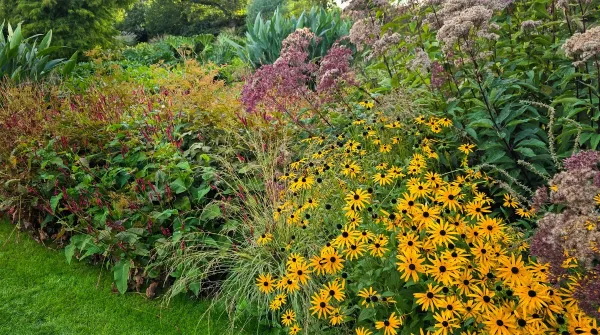
The Water Garden at Beth Chatto Gardens was originally a stream running through a boggy hollow. Now it’s four interlinked ponds, fringed with dramatic foliage. The soil here is more moisture-retentive than in the Gravel Garden and the water is closer. So Asa has combined plants which like the same sort of conditions:
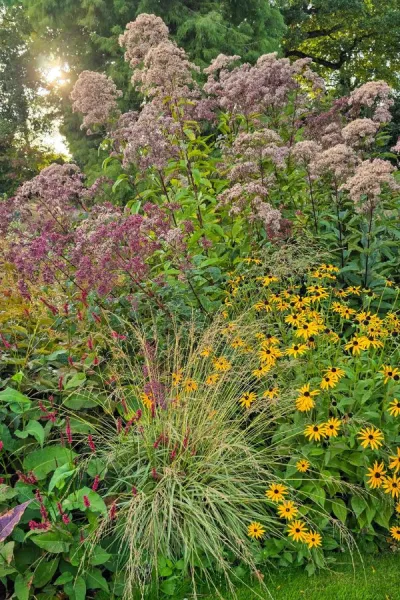
- Bistorta (formerly Persicaria) – for spikes of deep red colour
- Joe Pye Weed (Eutrochium, formerly Eupatorium) – tall, fluffy pink flowerheads to contrast with the persicaria spikes.
- Rudbeckia (Black-eyed Susan) deamii. A low-growing yellow daisy flower, combining well with the red and pink for a warm autumn glow.
- Molinia – there’s a subtle yellow stripe to the leaves, which picks up on the yellow rudbeckias.
Autumn perennials in soft pinks and pastels
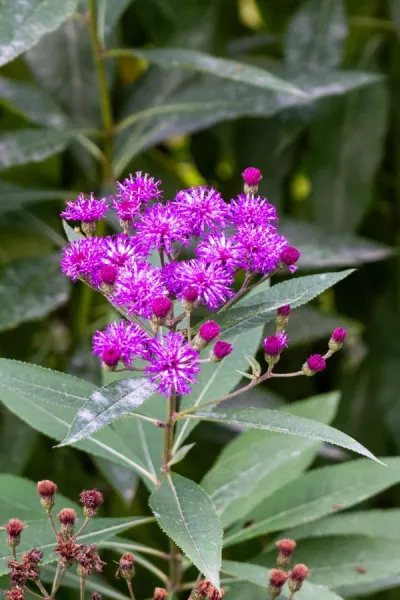
We think of autumn/fall colour as full of oranges, rich reds and golds, but if you prefer a softer palette, there are a number of options.
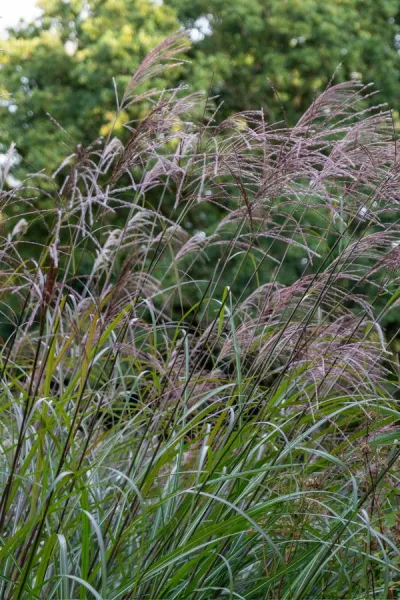
Resilient Autumn Perennials for Dry Shade
‘In shade it’s not just about flower colour; it’s about texture and form,’ says Asa. There are fewer plants that flower in shade but a wide choice of good textural plants with interesting foliage.
Here is a plant combination ‘recipe’ for dry shade from the Beth Chatto Gardens:
- A flower: Liriope muscari (lilyturf) – purple spikes in late season.
- A distinctive leaf (with flowering interest earlier in the year) Geranium phaeum – excellent in dry shade for leaf interest and spring flowers.
- An ornamental grass to add movement (Melica
Tip: Plant in autumn, water in really well, then mulch.
Autumn Perennials for Dry or Gravel Gardens
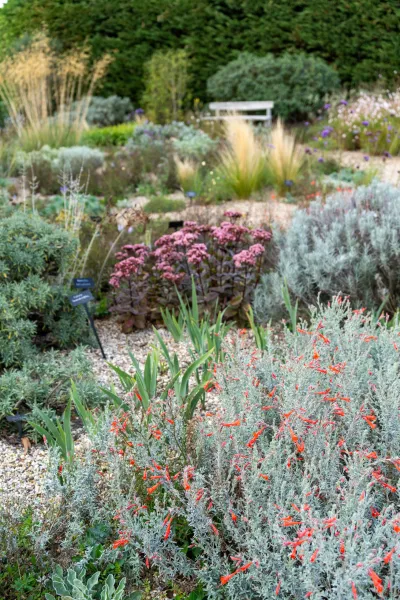
The Beth Chatto gravel garden is one of the most famous in the UK – and perhaps even in the world. It’s never irrigated – although individual plants are watered when first planted.
It’s also never given any organic mulch. ‘When Beth first created the garden in 1992, she added organic matter,’ says Asa. ‘But we soon discovered it didn’t need it.’ They add a new layer of gravel from time to time.
However, this is not necessarily a ‘low maintenance’ garden – in autumn, they have to clear away fallen leaves, and throughout the year, weeding out self-seeding plants by hand is a continuous job. ‘Everything germinates under the warm gravel,’ says Asa.
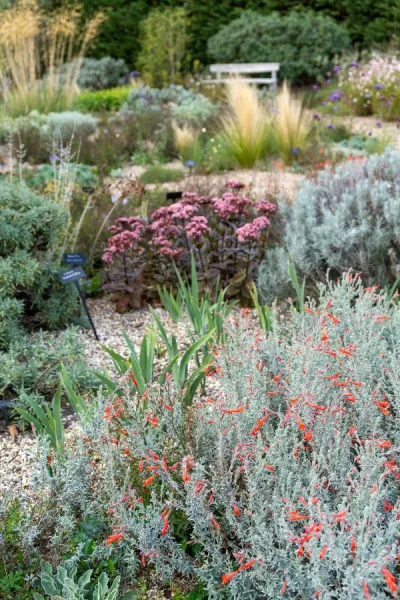
Beautiful autumn perennials in the Gravel Garden include:
- California fuchsia really bright, intense little trumpet flowers—’but it needs very free-draining soil.’
- Hylotelephium (formerly Sedum) ‘Matrona’, ‘Autumn Joy’ and others. These resilient plants are both beautiful and hardy – it would be hard to have a good autumn garden without them.
- Oenothera (Gaura) lindheimeri – clouds of small flowers from early summer on.
- Grasses: Pennisetum macrourum (upright), Stipa (movement)
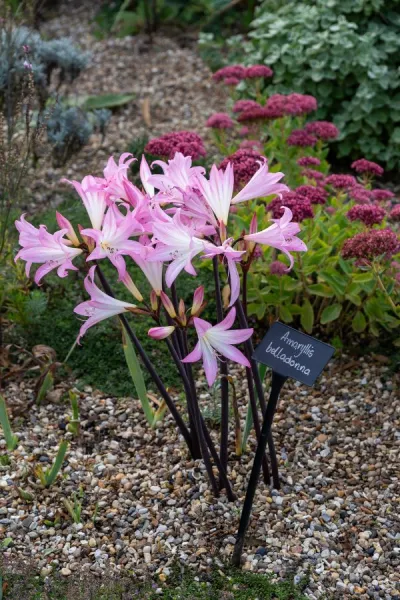
- Autumn bulbs & rhizomes: colchicums, amaranthus and hesperantha.
Happy Reading!
