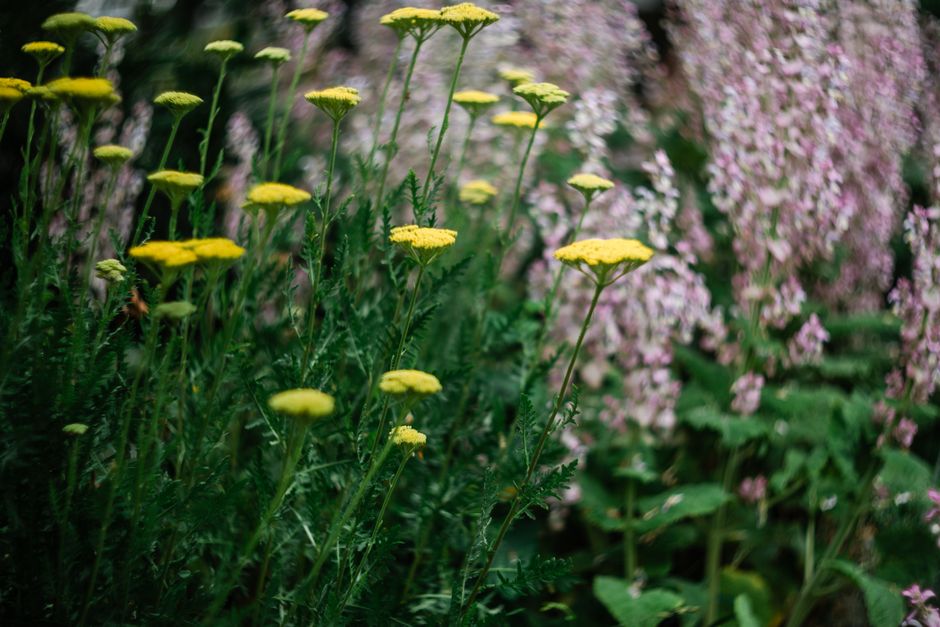
A 1.8-metre plant can take up less ground space than a 30-centimetre mound. That simple fact explains why height is often safer than adding more plants when a May border feels flat. The controlling issue is not how many flowers you can fit into the bed. It is how clearly the eye can read the bed from the path, window, or seating area.
This guide treats a garden border like a careful case: establish the facts, test the layout, identify failure points, and choose a clear verdict. No state law is being discussed in this horticultural guidance.
How Tall Should a May Border Be?
My recommendation is to choose one dominant height, then support it with two lower layers. A border usually looks crowded when every plant competes at the same level. A tall, airy group gives the eye somewhere to travel; a middle layer supplies the main color; and a low edge keeps the design tied to the path.
Set the height by the viewing position
For a border beside a path, keep the front 30 to 45 centimetres low so foliage does not swallow the route. Place the tallest plants where they will not block a gate, window, or favorite view. In a bed seen from one side, the tallest third should normally sit toward the rear. In an island bed, place tall plants in a loose central group rather than building a solid wall.
Use one dominant height, not five competing peaks
Choose one main vertical range, such as 120 to 180 centimetres, and repeat it in at least three places. Add a middle layer between 45 and 90 centimetres and a low layer below 40 centimetres. This creates order without making the planting look clipped. The verdict is clear: one repeated tall form usually gives a small garden more space than several unrelated tall plants scattered across it.
Which Plant Heights and Colors Work Together?
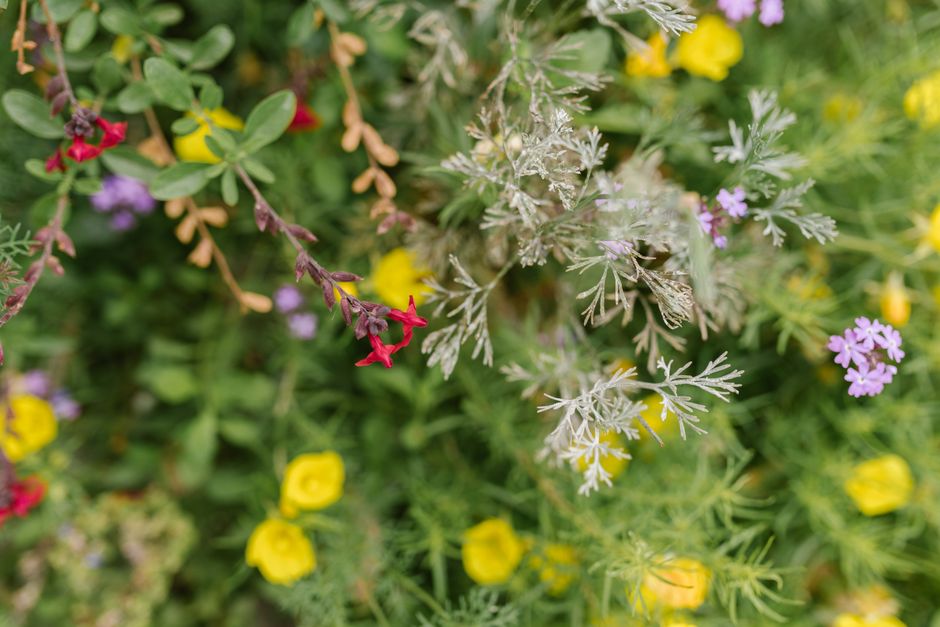
The strongest May combinations usually contain a narrow color range and a clear height ladder. The following examples use mature sizes, not the small plants sold in spring containers. Allowing for mature spread is the difference between a border that looks full and one that becomes congested by midsummer.
A practical height-and-color comparison
| Plant | Typical mature height | Primary role | Color contribution |
|---|---|---|---|
| Verbena bonariensis | 120–180 cm | Airy vertical accent | Clear purple |
| Digitalis purpurea ‘Alba’ | 120–150 cm | Back-of-border spike | White |
| Salvia nemorosa ‘Caradonna’ | 45–60 cm | Repeated middle layer | Deep violet-blue |
| Echinacea purpurea ‘Magnus’ | 90–120 cm | Strong summer bridge | Rose pink |
| Geranium ‘Rozanne’ | 50–60 cm | Soft spreading filler | Blue-violet |
| Heuchera ‘Caramel’ | 30–45 cm | Front foliage block | Apricot bronze |
Make color repeat before adding another color
Repeat one strong color at least three times before introducing a new one. For example, the violet of Verbena bonariensis, Salvia nemorosa ‘Caradonna’, and Geranium ‘Rozanne’ can connect separate planting groups. White foxglove can act as a visual pause, while Heuchera ‘Caramel’ adds warmth without creating another bright flower color. The best choice for a narrow border is this restrained violet, white, and bronze scheme because it gives contrast while keeping the eye inside a simple pattern.
Why Do Borders Become Overcrowded Before They Flower?
Overcrowding usually begins at the buying stage, when every plant is judged by the size of its pot rather than its mature footprint. A young perennial may look harmless at 20 centimetres wide. If its mature spread is 60 centimetres, planting three of them in a one-metre run leaves almost no room for air, mulch, or access. May is when the mistake becomes visible because leaves expand quickly before the full summer display arrives.
Judge the root zone, not just the flower head
Flowers attract attention, but roots and basal foliage determine whether a border stays workable. Two plants with narrow stems may still compete underground if their crowns sit too close together. Read the mature width on the label, then add a small working gap where you need to weed or divide. A bed can look slightly sparse in May and still be correctly planted for August. That is a sound design decision, not wasted space.
Separate visual density from plant count
Dense color does not require dense planting. Repeated foliage shapes can make three groups read as one composition, while a larger number of unrelated leaves makes the same area look noisy. Use one broad mass, one upright form, and one fine texture in each viewing zone. The eye reads those differences quickly, so the border appears richer without demanding extra plants.
Keep a sightline test in the plan
Before planting, stand at the main viewing point and mark the edges of the bed with canes or empty pots. Check the view from a seated position as well as standing. If the proposed tall layer hides a doorway or cuts across a path, move it before roots settle. The failure mode here is easy to prevent: a design that looks balanced on paper may be obstructive at human eye level.
How Do You Layer Height and Color in May?
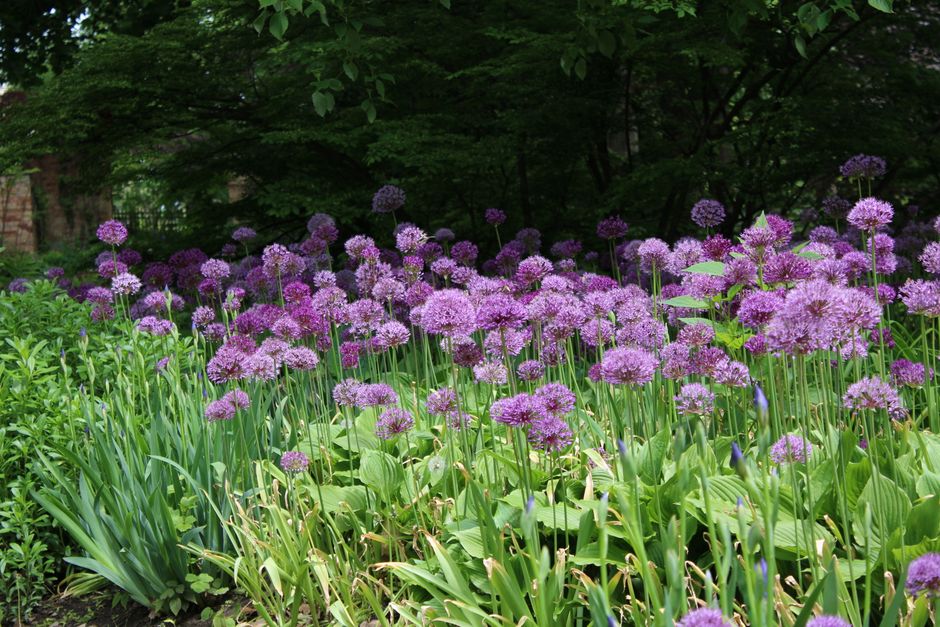
The most reliable method is to plant in passes. Each pass answers one question before the next layer is added.
A five-pass planting sequence
- Mark the sightline. Stand where the border will be viewed most often. Keep the lowest edge visible and identify any window, gate, or path that must remain open.
- Place the vertical anchors. Use three or five repeated tall forms rather than one isolated spike. Verbena bonariensis works well where an airy silhouette is useful; Digitalis purpurea ‘Alba’ suits a quieter white accent.
- Add the middle color. Repeat Salvia nemorosa ‘Caradonna’ in groups of three or five. Keep each group visually connected, but leave enough room for its mature 45–60-centimetre spread.
- Fill the front with foliage. Use Geranium ‘Rozanne’ or Heuchera ‘Caramel’ to soften the edge. Do not place every low plant along the exact same line; a shallow stagger looks more natural.
- Remove one weak element. If two colors or shapes compete, take out the less useful one. The best May border usually improves when the final decision is subtraction.
The clear verdict on color planning
For a small or medium border, a two-color flower scheme plus one foliage tone is the strongest starting point. Purple and white create clear contrast, while bronze foliage warms the composition. Adding orange, red, yellow, and pink at the same time may produce individual highlights, but it weakens the height pattern and makes the bed appear fuller than it is.
What Should You Cut When a Border Feels Busy?
Cut repeated shapes before cutting the number of colors. A border often feels crowded because every plant has a rounded mound, a broad leaf, or a heavy flower head. Removing one duplicate shape can open the design faster than removing an entire color family.
Three common failure modes
- Equal spacing: Plants placed at identical intervals create a row, not a border. Use loose groups with deliberate gaps between groups.
- Peak after peak: Several tall stems at equal height form a fence. Break the line with lower plants or move one group forward.
- Color without repetition: A single red, orange, or yellow plant may look accidental. Repeat it or remove it.
- Buying for May only: A bed that looks perfect when planted may collapse under mature foliage. Design for the widest expected spread.
When not to add another plant
Do not add a new specimen to solve a gap that will close as existing plants grow. Wait two to four weeks, mark the open space, and watch how the light changes through the day. If the gap remains, add one plant that repeats an existing height or color. The best correction is usually a familiar form in a new position, not a new color or unusual shape.
May Garden Design Questions, Answered
Can tall plants go at the front of a border?
Yes, but only when the plant is narrow, transparent, or placed beside a path junction where it does not block movement. Verbena bonariensis is a better front-position candidate than a dense shrub because its stems allow the background to remain visible. The verdict is to reserve solid, broad plants for the rear and use airy verticals sparingly at the front.
How many plants should form one color group?
Three plants create a readable minimum in a small bed; five or seven can make a larger group feel intentional. Salvia nemorosa ‘Caradonna’ is most convincing when repeated rather than displayed as one isolated clump. Odd numbers are a useful starting rule, but mature width matters more than the number itself. Three overcrowded plants are still overcrowded.
What is the best choice for a narrow border?
Use one vertical accent, one middle-height repeated color, and one low foliage texture. A combination of Verbena bonariensis, Salvia nemorosa ‘Caradonna’, and Heuchera ‘Caramel’ gives height, flower color, and front-edge structure without requiring a deep bed. That is the most dependable arrangement for a narrow space in May because each layer has a separate job.
As gardens move toward more wildlife-friendly and climate-aware planting, the same design rule will remain useful: give every plant enough room to perform, then let height and repeated color create richness with fewer competing parts.