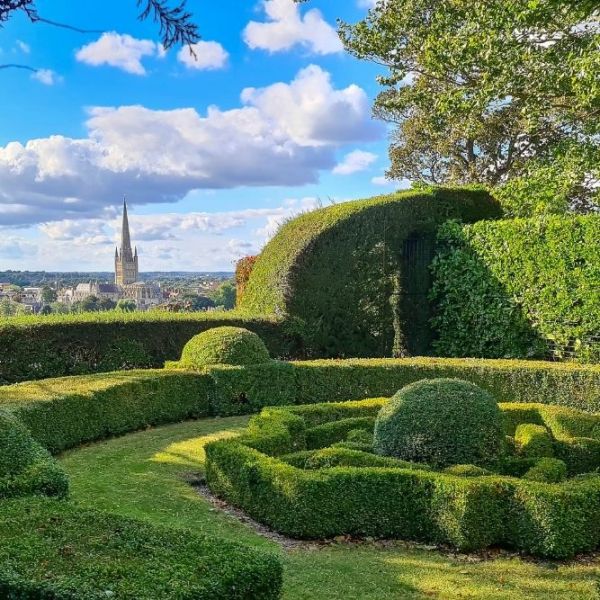
A clever evergreen garden with a touch of grandeur
Three years ago I stood in my backyard staring at a flat rectangle of lawn bordered by a tired fence. I wanted something that looked intentional and impressive every single month — not just June through August. No empty flower beds in winter. No brown gaps. I wanted an evergreen garden with actual presence. Not a boring hedge wall. Not a row of identical shrubs. Grandeur.
I made mistakes. I bought plants that looked great in pots at the nursery and turned into leggy messes within a year. I spent money on structural elements that looked cheap. But I figured it out. Here’s exactly what I did, what I’d do again, and what I’d skip.
Why Most “Evergreen” Gardens Are Boring — and How to Fix That
Most people hear “evergreen” and think: green blob. A row of boxwoods. A yew hedge. Maybe a juniper ground cover. That’s not grandeur. That’s a parking lot.
The problem is that evergreen gardens often lack three things: height variation, texture contrast, and seasonal interest beyond green. You need all three to make a garden feel deliberate and rich.
Here’s the fix in one sentence: treat evergreens like the bones of the garden, not the entire skeleton. Use them to create structure — walls, columns, ground planes — then layer in plants that flower, berry, or change color in winter. The evergreens hold the space. The other plants make it sing.
I started by mapping my yard into three vertical zones. Under 2 feet: ground covers and low shrubs. 2 to 5 feet: mid-level structure. Over 5 feet: vertical accents and screening. Every zone needed at least one evergreen plant that kept its shape and color through December.
If you only remember one rule: never plant a single evergreen alone. Group them in odd numbers — 3, 5, 7 — or use them in drifts. A lone boxwood ball looks like an afterthought. A cluster of three Ilex crenata ‘Sky Pencil’ hollies standing like sentinels? That’s design.
The 5 Plants I Rely On for Year-Round Structure
I tested about 20 different evergreen species over three years. Some died. Some grew too fast and needed constant hacking. Some just looked sad. These five earned permanent spots.
1. Buxus sempervirens ‘Graham Blandy’ — The Column
Standard boxwood is a ground-hugger. ‘Graham Blandy’ grows upright like a narrow pillar — 8 to 10 feet tall, only 2 feet wide. I planted three of these along my fence line at 4-foot spacing. They create vertical punctuation without blocking light. Price: about $45 for a 3-gallon pot. Slow-growing, so don’t expect instant height. Worth the wait.
2. Ilex crenata ‘Sky Pencil’ — The Tight Column
This Japanese holly looks like a green exclamation mark. 6 feet tall, 14 inches wide. I use these flanking my front door and along a path. They’re denser than boxwood and don’t get boxwood blight. Downside: deer will eat them if hungry. In my urban yard, no problem. In the suburbs, fence them or spray. $35 for a 2-gallon pot.
3. Pinus mugo ‘Mops’ — The Mounded Texture
Most people think of mugo pines as those scraggly shrubs from alpine vacations. ‘Mops’ is different — a dense, slow-growing dwarf that forms a perfect dome. 3 feet tall, 4 feet wide after 10 years. Needle texture breaks up all the broadleaf evergreens. I have three of these as anchor points in a gravel bed. $30 for a 1-gallon pot.
4. Euonymus fortunei ‘Emerald ‘n’ Gold’ — The Spiller
You need something that covers ground and trails over edges. This variegated euonymus does both. Gold edges, green center, stays colorful all winter. I grow it over a low retaining wall and let it cascade. It roots where it touches soil, so it fills gaps fast. Trim it twice a year or it gets shaggy. $12 for a 1-quart pot. Cheap and effective.
5. Trachelospermum jasminoides — The Wall Cloak
Star jasmine is technically semi-evergreen in cold climates, but in zones 8-10 it stays green all year. I trained it up a south-facing wall with galvanized wire. Glossy leaves, white fragrant flowers in June, zero maintenance after year two. It covers 10 feet of wall in three seasons. $20 for a 1-gallon pot.
How I Added Grandeur Without Spending a Fortune
Grandeur doesn’t mean expensive. It means scale and repetition. Here’s what I did that cost under $500 total and transformed the garden.
The Gravel Grid
I replaced a 12×12 foot section of lawn with a grid of 2-foot-wide decomposed granite paths. The paths divide the space into four planting beds. The gravel is cheap — $8 per bag, 10 bags covered the whole area. The paths give the garden a formal bones structure. You walk through it, not just look at it.
Repetition of Shapes
I planted three identical Ilex crenata ‘Sky Pencil’ in a row. Then three identical Buxus ‘Graham Blandy’ in another row. The repetition creates rhythm. One plant is a plant. Three identical plants is a statement. This cost me about $120 total.
One Focal Point
I bought a single large terracotta urn — 24 inches tall, $90 at a garden center — and planted it with a dwarf Alberta spruce surrounded by trailing ivy. That urn sits at the end of the gravel path. It draws your eye. Without it, the garden would feel flat. With it, the whole space has a destination.
| Element | Cost | Impact |
|---|---|---|
| Decomposed granite (10 bags) | $80 | Creates paths and structure |
| 3x ‘Sky Pencil’ hollies | $105 | Vertical repetition |
| Terracotta urn + dwarf spruce | $120 | Focal point |
| Galvanized wire + hooks for jasmine | $30 | Living wall |
| 3x ‘Mops’ mugo pines | $90 | Texture anchors |
| Total | $425 |
Winter Interest: The Secret to a Garden That Doesn’t Die in November
An evergreen garden that’s only green in winter is still boring. You need winter interest — berries, bark, flowers, or unusual shapes that stand out against the gray sky.
Here’s what I added that made people actually stop and look in January.
Hellebores — The Winter Flowers
Helleborus x hybridus, commonly called Lenten rose, blooms from January through March in my zone 7b garden. I planted a dozen under the star jasmine wall. The flowers are nodding, cream-colored with pink speckles. They look delicate but handle snow and ice. $15 per plant from a specialty nursery. Worth every penny.
Berries That Pop
Skimmia japonica ‘Rubella’ has red flower buds all winter that open to pink in spring. The male form produces no berries but the buds are showy enough. I planted three in a shady corner. Deep red against dark green leaves. It’s the closest thing to Christmas ornamentation without plastic.
Sarcococca confusa — sweet box — is small, unassuming, and smells incredible. Tiny white flowers in December and January that perfume the entire path. I planted it near the front door so I catch the scent every time I come home. $18 for a 1-gallon pot.
Bark That Matters
I added one Acer griseum (paperbark maple) in a corner. It’s deciduous, but the peeling cinnamon bark is stunning all winter. It drops its leaves in November, revealing the trunk. The evergreen shrubs around it create a green backdrop that makes the bark glow. This was the most expensive plant — $80 for a 5-gallon — but it’s the winter star of the garden.
Don’t be afraid of a few deciduous plants in an evergreen garden. They add seasonal change. The evergreens provide the constant. The deciduous ones provide the event.
The Mistakes I Made So You Don’t Have To
I killed about $200 worth of plants in year one. Here’s what went wrong.
Planting Too Densely
I crammed seven boxwoods into a 4×4 foot bed because I wanted instant fullness. Two years later they were choking each other, leaves turning brown from poor air circulation. I had to dig up three and move them. Spacing rule: take the mature width and add 50%. If a shrub grows 3 feet wide, plant it 4.5 feet from the next one. Patience pays.
Ignoring Drainage
I planted three Pinus mugo ‘Mops’ in a low spot where water pooled after rain. They died within six months. Mugo pines need sharp drainage. I now build a slight mound — 6 inches high, 2 feet wide — for every conifer. Cost: free (just soil from another part of the yard).
Buying Cheap Pots
I bought a $12 terracotta pot from a big box store. It cracked in the first freeze. I replaced it with a glazed ceramic pot from a local nursery for $45. It’s been through two winters without a crack. Spend on containers that will live outside year-round.
Forgetting to Water in Winter
Evergreens lose water through their leaves all winter, especially when the ground is frozen. I lost two ‘Sky Pencil’ hollies to winter desiccation. Now I water deeply once a month if there’s no snow cover and the ground isn’t frozen solid. A simple drip line on a timer solves this.
When NOT to Build an Evergreen Garden
I’m going to say something unpopular: an evergreen garden isn’t right for everyone. If you live in zone 4 or colder, your evergreen options shrink dramatically. Many broadleaf evergreens will burn or die. You’ll be limited to conifers, some hollies, and a few ground covers. The grandeur becomes harder to achieve without the texture variety of broader leaves.
If you want a cottage garden with billowing perennials and color every month from April to October, an evergreen-heavy design will fight that. Evergreens are static. They don’t change much. If you love the chaos of annuals and self-seeding flowers, lean into that instead. Don’t force structure where you want wildness.
If your yard is completely shaded by buildings or large trees, most evergreens will struggle. Buxus and Ilex crenata tolerate shade but won’t be dense. Pinus mugo needs full sun. Trachelospermum won’t flower in shade. You’d be better off with ferns, hostas, and shade-tolerant deciduous shrubs that provide winter bark interest.
And if you’re on a tight rental with a balcony, skip the grand plan. A few pots of Euonymus fortunei and a dwarf conifer in a nice container will give you winter greenery without the commitment. Grandeur requires ground.
For everyone else — zones 6-9, with at least 4 hours of direct sun, and a desire for a garden that looks like someone actually thought about it — an evergreen garden with grandeur is achievable. Start with structure. Add texture. Layer in winter interest. Give it three years.
That flat rectangle of lawn I started with? It’s now a garden I walk through every morning, even in January. The gravel paths crunch underfoot. The hollies stand tall. The hellebores are blooming. And the terracotta urn at the end of the path pulls it all together. It took three years and about $500 in plants and materials. It was worth every dime and every mistake.
