What you need to know to create an outstanding perennial border
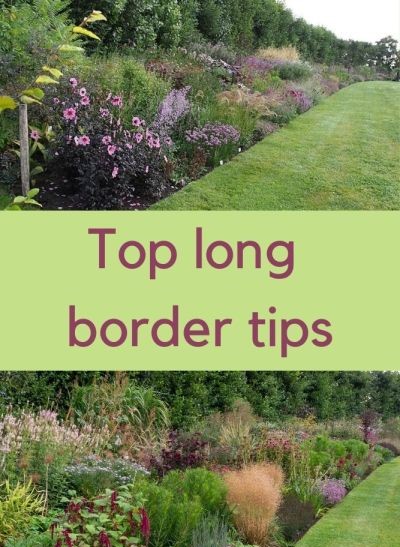
The Real Reason Most Perennial Borders Look Bare by August
The border looks incredible in June. By August it’s tatty foliage, bare patches, and a few stragglers clinging on. I’ve watched this happen in garden after garden — including my own, in the early years — and it almost always comes down to the same problem: planting for one peak rather than a full season.
The trap gets set at the garden centre. You visit in May when everything is in bloom. You pick what looks stunning right now. Salvia nemorosa ‘Caradonna’ with its deep purple spikes on near-black stems. Geranium ‘Rozanne’ smothered in violet-blue flowers. Nepeta spilling beautifully over the path edge. You buy six of each, plant them up, and the border is genuinely beautiful — for about eight weeks.
Then everything finishes at once. Nothing fills the gap between early summer and autumn. The plants that looked so good in June have unremarkable foliage once the flowers fade, and the whole border goes from full to hollow with very little warning.
Fix It Before You Buy a Single Plant
Write out a simple bloom calendar before you spend anything. Three columns: early season (April–June), midsummer (July–August), and late season (September–October). Your job is to achieve roughly equal representation across all three. If the majority of your picks cluster in the first column — which is exactly what happens when you shop in May — you’ve already built a border that will disappoint you by late summer every year.
This doesn’t mean you need plants that flower for months on end. It means the border as a whole should have something handing off to something else, continuously. Think relay race, not a hundred-metre sprint.
Why Foliage Is the Piece Most Beginners Skip
Flowers last weeks. Decent foliage runs from April to October. A plant with genuinely good leaves earns its space in the gaps between blooming, and the best perennial borders understand this instinctively.
Penstemon ‘Husker Red’ has burgundy stems and dark foliage from the moment it emerges in spring — worth growing for that alone, with the pink-white flowers from June a bonus. Stipa gigantea (golden oat grass, reaching around 1.8m at full height) catches morning light and every passing breeze in a way no flower can match. Before committing to any plant, ask honestly: what does this look like in September when it isn’t flowering? If the answer is bare sticks or a pile of floppy green mush, think carefully about how much border space you’re prepared to give it.
The Specific Plants That Carry a Border from May to October
Most planting guides glide past the practical detail with vague advice about choosing a variety of bloom times. Here are actual plants, with heights and timing, that I’ve grown and would put in again without hesitation.
Spring and Early Summer Anchors (April–June)
Salvia nemorosa ‘Caradonna’ is the most reliable plant in my early-season border. Deep purple spikes on near-black stems, reaching about 60cm. It blooms from May into June, and if you cut it back hard after the first flush — right down to the basal leaves — you’ll often get a second wave in August. The spent stems hold their shape for weeks, which means it contributes visually even between flushes.
Nepeta ‘Walker’s Low’ is silver-green, sprawling and almost continuously in bloom from late spring through summer. It softens path edges and front borders effortlessly. Cut it back by half in early July when it starts to look tired, and it’ll regenerate within three weeks, producing a strong second flush through August and September.
Geranium ‘Rozanne’ is often listed as a midsummer plant, but in good soil mine starts flowering in late May and keeps going until October with minimal intervention. One important note: the tag may say 45cm spread. In practice it covers 80–90cm within two seasons. Plan for that space, or it’ll swamp its neighbours.
Midsummer Mainstays (July–August)
Echinacea purpurea earns its place across two distinct seasons. The flowers — rosy-pink daisies with raised orange-brown centres — are good from July through to September. The architectural seedheads that follow are genuinely valuable all winter, feeding goldfinches and other seed-eating birds and remaining structurally interesting even covered in frost. Height is around 90cm, and it self-seeds gently into gaps over time — free plants appearing in exactly the right places.
Achillea ‘Coronation Gold’ has flat-topped golden heads at around 70cm and is drought-tolerant once established — a real advantage through dry summers. The feathery silver-green foliage is attractive from spring. Cut back the spent heads after the first flowering and it often produces a smaller secondary flush.
Persicaria amplexicaulis ‘Firetail’ is one of the few perennials I’d call genuinely tough in almost all conditions. Red, poker-like flower spikes from July right through October. Foliage that stays presentable throughout the season. And a clump that grows larger and more impressive every year — give it at least 90cm to spread into, because it will use it.
Late Season Heroes (September–October)
Rudbeckia fulgida ‘Goldsturm’ peaks in September and holds well into October. Golden-yellow daisies with dark centres, 60cm, disease-resistant and reliable in almost any reasonable soil. This plant actively rescues a border that’s running out of steam and combines brilliantly with the blues and purples of autumn asters.
Aster x frikartii ‘Mönch’ has significantly better mildew resistance than many asters, which have historically been a problem in borders — powdery mildew strips them of foliage by August. ‘Mönch’ produces lavender-blue daisies on 70cm stems and is at its best in September. Pair it with Rudbeckia fulgida and Hylotelephium ‘Autumn Joy’ for a late-season combination that requires almost no effort.
Hylotelephium (formerly sold as Sedum) ‘Autumn Joy’ contributes visually from midsummer, when its flat heads emerge as tight, broccoli-like buds. These slowly turn from pink to deep rose-red to a warm rust-brown seedhead — carrying from late summer right through winter if you leave them uncut. Height: 45–60cm and very structural.
Five Rules for Layering Height So the Border Never Looks Flat
The standard advice — tallest at the back, shortest at the front — produces something that looks like stadium seating. Technically correct, visually tedious. Here’s a more considered framework:
- Set your rear anchors first. Anything regularly exceeding 1.2m — Veronicastrum virginicum (white or pale lilac architectural spires, August–September), Stipa gigantea, tall Persicaria, or the statuesque Thalictrum delavayi — defines the scale of the whole planting. Decide these positions before anything else goes in.
- Build the mid-tier at 60–90cm. This is your relay zone. Echinacea, Salvia, Rudbeckia, Achillea, Phlox paniculata ‘David’ (scented, mildew-resistant, white, 90cm) — load this layer with plants covering all three seasonal windows. It does the heaviest lifting in the border.
- Break the cascade deliberately. Pull the occasional mid-height plant forward, closer to the path or lawn edge. A single bold clump of Achillea or a self-seeded Echinacea near the front disrupts the stepped pattern and creates depth. Rigid descending tiers always look like they were measured with a ruler.
- Use the front 30–40cm for spreaders. Geranium ‘Rozanne’, Nepeta, low sedums. They knit the border together, suppress annual weeds between larger plants, and make the whole planting look intentional rather than planted in strict rows.
- Leave deliberate gaps for self-seeders. Echinacea, Rudbeckia, and Verbena bonariensis will work their way into gaps and choose their own positions. This quality — plants settling themselves informally across the planting — is what separates a good perennial border from a stiff, over-managed display bed.
The Spacing Mistake That Costs You Three Years
Plant tags almost universally underestimate final spread. A Geranium ‘Rozanne’ tagged at 45cm will cover 80–90cm of ground by year two in decent soil. Persicaria amplexicaulis roughly doubles in spread within three seasons. Echinacea clumps push steadily outward each year. Plant at the recommended spacing, then fill gaps in years one and two with annuals — cosmos, ammi majus, Verbena bonariensis — rather than cramming in additional perennials. By year three, the perennials will have claimed every bit of space themselves. Resist. It is genuinely the hardest part of starting a new border, and it is the part most gardeners get wrong the first time.
What Your Soil and Site Are Actually Telling You
Does my soil need amending before I plant?
Almost certainly yes — but less dramatically than most guides suggest. Dig in a 5–7cm layer of garden compost across the whole bed before planting. Not bark mulch, not horticultural grit, not peat — garden compost. It improves drainage in clay and moisture retention in sandy soil at the same time, which nothing else does quite as efficiently. A basic soil pH test costs around £6–8 at any garden centre. Most perennials prefer a pH between 6.0 and 7.0. Below 6 and you’ll want to add garden lime; above 7.5 and nutrient deficiencies become a persistent problem regardless of how much you feed.
How much sun does a perennial border actually need?
The classic perennial palette — Echinacea, Rudbeckia, Salvia, Achillea — wants at least five to six hours of direct sun daily. Less than that, and these plants produce sparse flowers, grow lax and leggy, and become prone to mildew. A partially shaded spot getting three to four hours of sun is a completely different planting brief. Astrantia ‘Hadspens Blood’, Geranium phaeum, Thalictrum delavayi, and Digitalis purpurea (foxglove, technically biennial but self-seeding freely) are the workhorses in those conditions. Don’t try to force sun-lovers into shade. You’ll spend money, lose plants, and end up with bare soil anyway.
What about clay or sandy soil?
Clay, once broken up and amended with compost, is actually productive for perennials — it holds moisture and nutrients well through dry periods. Rudbeckia, Persicaria, Phlox paniculata, and most asters handle heavier soil without complaint. Avoid anything labelled “requires excellent drainage” — Agapanthus ‘Headbourne Hybrids’ and many ornamental grasses will sit through a wet winter in clay and simply rot.
Sandy soil drains too fast, leaching water and nutrients before plants can access them. Annual compost additions help significantly, but plant selection matters more in the long run. Achillea, Echinops ritro (globe thistle, steel-blue spherical heads, 90cm, July), Stachys byzantina (lamb’s ears, silver felt foliage, 40cm), and Eryngium all thrive in free-draining conditions. Astilbe, Ligularia, and Trollius will fail fast — these are moisture-lovers, and no amount of watering compensates for soil that won’t hold it.
Formal Perennial Border vs. Naturalistic Planting: Which Suits Your Garden?
The style question should come before the plant list, not after. A formal border and a naturalistic New Perennial planting can use many of the same plants and produce entirely different results — and the wrong choice will look out of place regardless of how good the individual plants are.
| Feature | Formal Perennial Border | Naturalistic Planting |
|---|---|---|
| Visual character | Structured, colour-blocked, controlled | Flowing, intermixed, self-seeding encouraged |
| Ongoing maintenance | Higher — staking, regular deadheading, dividing | Lower once established — one annual cut-back |
| Key plant choices | Delphiniums, Lupins, Phlox paniculata, Dahlias | Echinacea, Rudbeckia, Persicaria, Sanguisorba, Grasses |
| Best setting | Urban plots, architectural gardens, symmetrical layouts | Rural, informal, large-scale, cottage gardens |
| Winter interest | Low — typically cut back in autumn | High — seedheads and grasses left standing |
| Design heritage | Arts and Crafts, Gertrude Jekyll tradition | Piet Oudolf, New Perennial Movement |
If your garden has clipped hedges, stone paving, and clear geometric bones — a more structured formal border will read correctly in that context. If it backs onto open countryside, has relaxed boundaries, or covers a large area that would be expensive and time-consuming to maintain formally, a naturalistic approach is far more sustainable and will look more intentional over time.
The plants associated with naturalistic design — the Echinacea, Rudbeckia, Sanguisorba, and grasses seen in Piet Oudolf’s public plantings — are also considerably more wildlife-friendly. Seedheads feed birds through winter. Late flowers support pollinators into October. That’s not necessarily a reason on its own to choose one style over another, but for a lot of gardeners it tips the balance when everything else is roughly equal.
The perennial border has shifted significantly in the last two decades — away from the high-maintenance colour-wheel approach and toward resilient, lower-input plantings that deliver interest across the whole season rather than one brilliant week in early summer. That direction is better for gardeners, better for gardens, and better for everything that lives in them.
