Capsule Wardrobe Guide 2026: Stop Buying Clothes You Never Wear — A Capsule Wardrobe for Any Season (2026)
The average American spends $1,800 per year on clothing — yet wears only 20% of what they own regularly. That’s $1,440 vanishing into closet clutter. A capsule wardrobe flips this: 33 items, 100% wear rate, zero decision fatigue.
Here is the exact step-by-step system to build one that works for spring, summer, fall, and winter. No fluff. No aspirational Pinterest boards. Just a process that saves you money and time starting this week.
Why 33 Items? The Math Behind the Number
The 33-piece capsule isn’t arbitrary. It comes from Project 333, a minimalist challenge that asks you to dress with 33 items for 3 months. That includes clothing, shoes, outerwear, and accessories — but not underwear, sleepwear, or gym clothes.
Why 33? Because it forces tradeoffs. You cannot keep “maybe” items. Every piece must earn its spot by being worn at least once every two weeks. If you have 50+ items, you stop noticing what works. At 33, you remember every single piece.
The Real Cost of a Bloated Closet
Let’s put numbers on it. A typical capsule wardrobe costs $1,200–$2,000 if built from quality basics (Everlane, Uniqlo, Madewell, Patagonia). That’s a one-time spend. Compare that to the average person’s annual clothing spend of $1,800 — and you’re saving $600+ per year after the first year. Over five years, that’s $3,000 in your pocket.
What 33 Items Actually Looks Like
Here’s a real breakdown from my own 2026 spring capsule:
| Category | Number of Items | Example Pieces |
|---|---|---|
| Tops | 9 | 3 t-shirts (Uniqlo Supima Cotton, $15 each), 2 button-downs (Everlane Oxford, $68), 2 sweaters (Madewell cashmere-blend, $98), 2 blouses |
| Bottoms | 6 | 2 jeans (Levi’s 501, $98), 1 trouser (Everlane Day Pant, $78), 1 skirt, 1 pair of shorts, 1 pair of leggings |
| Dresses & Jumpsuits | 3 | 1 midi dress, 1 t-shirt dress, 1 jumpsuit |
| Outerwear | 3 | 1 trench coat (London Fog, $150), 1 denim jacket, 1 puffer (Patagonia Nano Puff, $269) |
| Shoes | 6 | 1 pair white sneakers (Veja Campo, $155), 1 pair loafers, 1 pair ankle boots, 1 pair sandals, 1 pair heels, 1 pair sneakers |
| Accessories | 6 | 1 belt, 1 scarf, 1 watch, 1 pair sunglasses, 1 tote bag, 1 crossbody bag |
That’s 33 items. Every piece can be worn with at least 3 others. Total outfit combinations: over 200.
The 3-Step Process to Edit Your Current Closet
You don’t need to buy anything yet. First, you need to see what you already own. Most people have 80% of a capsule wardrobe buried under impulse buys.
Step 1: The 15-Minute Toss
Set a timer. Grab every piece of clothing from your closet and drawers. Pile it on your bed. Now pick up each item and ask one question: “Would I buy this again today, at its original price?”
If the answer is no, it goes in the donate pile. No exceptions. This removes the emotional attachment to sunk cost.
Step 2: The 80/20 Test
From the remaining pile, pull out the 20% of items you wear 80% of the time. These are your keepers. For me, that was my two Uniqlo Supima tees, my Madewell jeans, and my Veja sneakers. Everything else is a candidate for replacement.
Step 3: The Season Swap System
Capsule wardrobes aren’t static. You swap 5–7 pieces per season. In spring, I add a trench coat and sandals. In winter, I swap in a puffer and boots. The core 25 items stay year-round. This prevents the “I have nothing to wear” feeling when the weather shifts.
Real talk: I kept a wool sweater in my spring capsule for three years because “I might need it.” I never wore it once between March and May. Donate it. Trust the system.
What to Buy (and What to Skip) for 2026
Here’s where most capsule guides fail: they tell you to buy “quality basics” without naming brands or prices. Let me be specific.
Buy These 5 Brands for Longevity
- Uniqlo — Supima Cotton tees ($15), Airism tanks ($10), and their blocktech parka ($80). Best price-to-wear ratio in the game. Expect 3–4 years of regular wear from a tee.
- Everlane — The Day Pant ($78) and Cashmere Crew ($128). Fit is consistent. Their “radical transparency” pricing means you know the markup is ~2x cost, not 8x.
- Madewell — Jeans ($128). The 10-inch high-rise skinny is a cult item for a reason. They also offer free hemming in-store.
- Patagonia — Nano Puff jacket ($269). It packs into its own pocket, is windproof, and has a lifetime repair guarantee. $269 feels steep until you realize you’ll own it for 15 years.
- Veja — Campo sneakers ($155). Made from organic cotton and wild rubber. They look better after 200 wears than the day you bought them.
Skip These 3 Things
- Fast fashion “basics” from SHEIN or Zara. A $5 tee that pills after 3 washes isn’t a bargain — it’s $5 wasted. You’ll replace it 4 times in a year, spending $20 total on garbage. Buy one $15 Uniqlo tee instead.
- Trendy statement pieces. A neon puffer or sequin skirt will be unwearable in 12 months. Capsule wardrobes are for classics. Save trends for accessories you can swap cheaply.
- Anything that requires dry cleaning. If it can’t survive a machine wash on cold, it doesn’t belong in a capsule. You won’t wear it enough to justify the $8 per clean.
How to Dress a Capsule for 4 Seasons Without Looking the Same
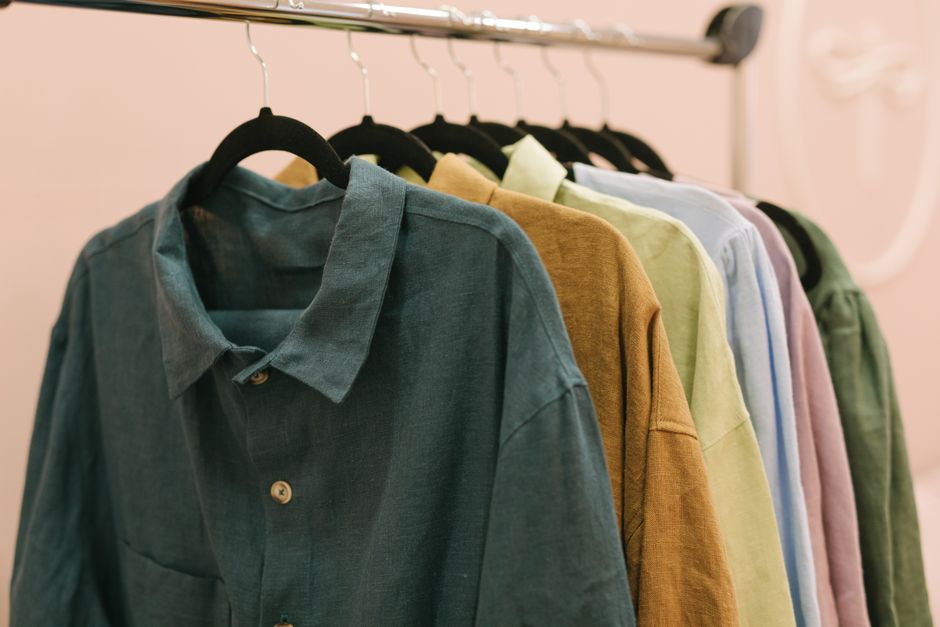
The biggest fear people have: “Won’t I look like I wear the same thing every day?” Yes — if you buy all neutral basics. The trick is to use texture, layering, and one accent color per season.
Spring 2026: Light Layers + One Pastel
Keep your core 25 items. Add a linen blazer ($98, Everlane) and swap your dark jeans for a light-wash pair. Choose one accent color — I use pale pink. A pink scarf or bag costs $30 and changes the entire vibe of a neutral outfit.
Summer 2026: Linen Everything
Swap two long-sleeve tops for linen tees ($20 each, Uniqlo). Replace ankle boots with sandals. Your trench coat goes into storage. The puffer stays out until September. That’s it — 5 pieces swapped, 28 stay the same.
Fall 2026: Texture Over Color
Bring back the trench. Add a chunky knit sweater ($98, Everlane). Swap sandals for loafers. This is where fabrics matter: wool, corduroy, and cashmere add visual interest without needing patterns or bright colors.
Winter 2026: The Puffer + Boots
The puffer comes out. Ankle boots replace loafers. Add a beanie and gloves. That’s your winter capsule. You now own 33 items that work from 10°F to 95°F.
The 3 Mistakes That Will Ruin Your Capsule
I’ve seen people try this and fail within a month. Here’s why — and how to avoid it.
Mistake 1: Buying All Neutrals
A capsule of beige, black, white, and gray looks like a uniform. You’ll get bored fast. Fix: pick one color that excites you — olive green, mustard yellow, or burgundy — and make 3–4 items in that color. Suddenly your outfits have personality.
Mistake 2: Ignoring Your Actual Life
If you work from home, you don’t need 3 blazers. If you commute by bike, linen pants will rip. Your capsule must match your real routine. Track what you actually wear for two weeks before buying anything.
Mistake 3: Not Accounting for Laundry
With 33 items, you’ll do laundry every 7–10 days. If you own only 9 tops, that means 9 wears between washes. If you sweat heavily or have kids, you need 11–12 tops. Adjust the numbers for your life — the 33-item rule is a guideline, not a religion.
When NOT to Build a Capsule Wardrobe

A capsule wardrobe is not for everyone. Here’s when it’s a bad idea.
- You attend formal events weekly. If you need evening gowns and suits every Friday, a 33-item capsule won’t cut it. Consider a separate “event” capsule of 10–15 pieces instead.
- Your weight fluctuates more than one size. A capsule assumes your body stays relatively stable. If you’re pregnant, postpartum, or actively losing weight, wait until you’re stable for 3 months before investing.
- You genuinely love fashion as a hobby. If shopping and styling bring you joy, a restrictive capsule will feel like a punishment. Instead, try a “closet budget” — spend $50/month on new pieces, but donate one item for every one you buy.
The single most important takeaway: a capsule wardrobe saves you money and time only if you actually wear every piece. Start with what you own, swap seasonally, and resist the urge to buy “just in case.” One year from now, you’ll have $600 more in your bank account and a closet that works.

Recent Comments