Konmari Wardrobe Decluttering: 5 KonMari Steps to a Closet That Actually Stays Tidy
You open your closet. Shirts are crammed together. Something falls on your foot. You own four black cardigans, and you still can’t find the one you want. Sound familiar?
The KonMari Method isn’t about throwing things away until you live in an empty room. It’s about keeping only what sparks joy—and finally making your closet work for you. Here’s exactly how to do it, one step at a time.
Step 1: Commit to the Category Method (Not Room-by-Room)
Marie Kondo says gather every single piece of clothing you own—from every closet, drawer, hook, and chair—and pile it on your bed. This is non-negotiable.
Most people declutter room by room. That’s why you organize your bedroom closet but still have a hoodie in the hall closet and a scarf in the car. You never see the full picture.
Why the pile works
When you see 15 pairs of black leggings in one heap, the problem becomes obvious. You can’t wear 15 pairs. You keep buying the same thing because you forgot you already had it. The pile forces honesty.
What to gather
- Tops (T-shirts, blouses, sweaters)
- Bottoms (jeans, trousers, skirts)
- Outerwear (jackets, coats, blazers)
- Socks and underwear
- Bags and accessories
- Shoes (yes, all of them)
- Seasonal items (swimwear, heavy coats)
One rule: no cheating. If it’s in a laundry basket, it goes on the pile. If it’s in your car, go get it.
Common mistake: starting with sentimental items like concert tees or old uniforms. Save those for last. Start with basics you have no emotional attachment to. Build the muscle first.
Step 2: The Joy Check—One Item at a Time
Pick up each item. Hold it. Ask one question: “Does this spark joy?”
That’s it. No “but I might wear it someday.” No “it was expensive.” Just how you feel right now, holding it.
If the answer is no, thank the item for its service and let it go. Sounds weird. Works anyway.
What “sparks joy” actually feels like
It’s not a lightning bolt. It’s a small, quiet feeling. A sweater you reach for every time it’s clean. Jeans that fit well and make you feel like yourself. A coat that feels like a hug.
If you feel nothing—or worse, guilt or obligation—it goes.
What to do with the “maybe” pile
Limit yourself. Put maybe-items in a box. Seal it. Write today’s date on it. If you don’t open it in six months, donate it unopened. Most people never open the box.
Failure mode to avoid: keeping something because it was a gift. The gift was the thought, not the obligation to store it forever. Thank the giver in your head, then pass it on.
Step 3: Fold Everything—Here’s the Exact Method
KonMari folding isn’t about perfection. It’s about making every item visible at a glance. No more digging through stacks.
The vertical fold technique
- Lay the item flat, front down.
- Fold one side toward the center, then the sleeve back.
- Repeat on the other side.
- Fold the bottom up to the collar, then in half (or thirds for longer items).
- Stand it upright in your drawer.
Every item should stand on its own. When you open a drawer, you see every shirt at once—like a filing cabinet, not a laundry pile.
For socks: fold the pair together, then roll into a small rectangle. No balls. Balls stretch out the elastic.
Drawer organization order
Left to right, light to heavy. Lightweight tops go on the left. Heavier sweaters on the right. Dark colors at the bottom, light at the top. This creates a natural visual gradient that your brain finds calming.
Real talk: this takes 20 minutes per drawer the first time. After that, it takes 30 seconds to put laundry away. Worth it.
Step 4: Hang the Rest—With Space Between
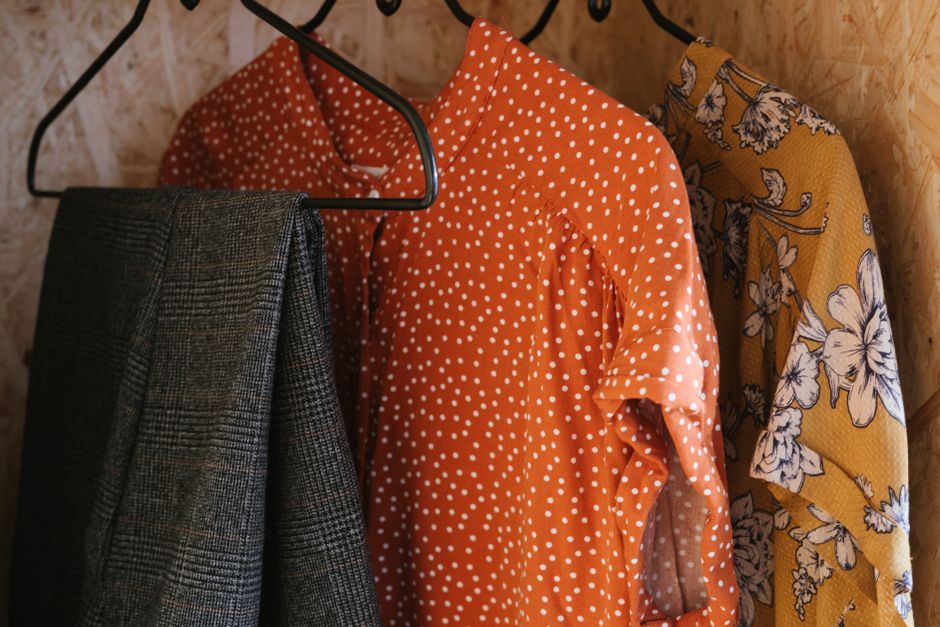
Not everything folds. Dresses, blazers, delicate blouses, and items you want to keep wrinkle-free go on hangers.
KonMari says hang items left to right by length, then by weight. Longest and heaviest on the left (coats, maxi dresses), shortest and lightest on the right (blouses, short skirts). This creates a rising line that feels lighter as your eye moves right.
The hanger rule
Use uniform hangers. Velvet or wooden, doesn’t matter—just pick one type. Mismatched hangers create visual noise that makes your closet feel messy even when it’s clean.
Thin wire hangers from the dry cleaner? Donate them. They warp clothes and slide off rods.
Space trick: leave a finger’s width between each hanger. No cramming. When hangers touch, items wrinkle and you can’t see what you own.
What NOT to hang
Knits (sweaters, cardigans) stretch out on hangers. Fold them. Same for heavy wool coats—they’re better folded over a padded hanger or stored flat.
When to break the rules: if you have limited drawer space, hang knits on thick, padded hangers and accept slight shoulder bumps. Better than a crammed drawer.
Step 5: Maintain Without the Guilt
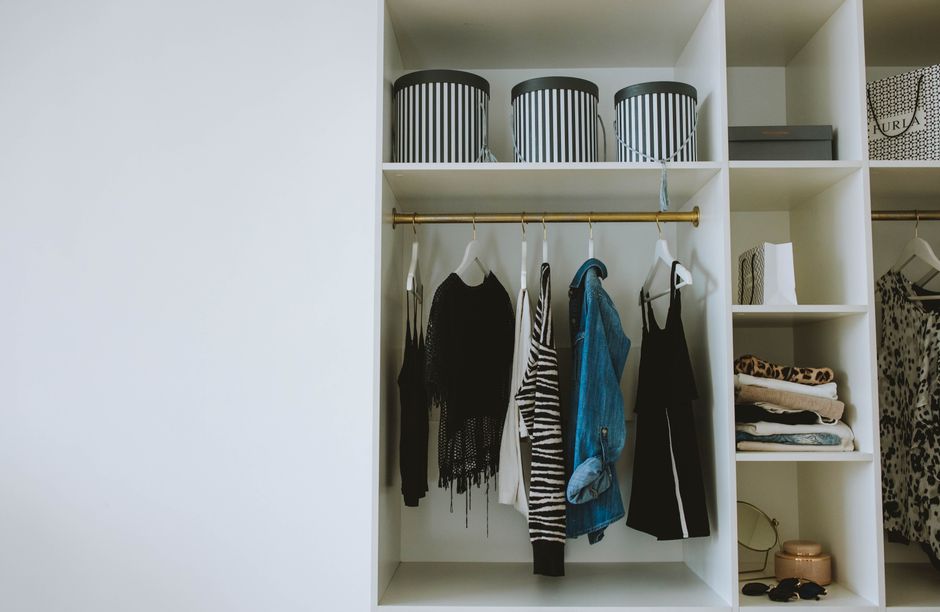
The KonMari Method isn’t a one-time event. It’s a maintenance habit. But maintenance doesn’t mean perfection.
The one-in-one-out rule
Every time you buy a new shirt, one old shirt leaves. No exceptions. This keeps your closet at the same size forever. No growth, no clutter.
If you buy a coat, a coat leaves. If you buy shoes, shoes leave. Match categories.
Seasonal check-in (twice a year)
Every April and October, pull out your seasonal items. Try them on. If something doesn’t fit, is damaged, or you didn’t wear it last season, it goes. This takes 15 minutes.
What happens when you slip
You will. Life happens. You’ll buy a sweater you don’t love, or someone gives you a scarf you’ll never wear. That’s fine. Just do a 10-minute reset: grab 5 items you know you don’t wear and put them in a donation bag. No guilt. No full re-do.
The real secret: a tidy closet isn’t about discipline. It’s about having fewer things you actually love. When everything in your closet sparks joy, getting dressed takes 2 minutes instead of 15.
Start with the pile. Hold each thing. Keep what you love. Let the rest go.

Recent Comments