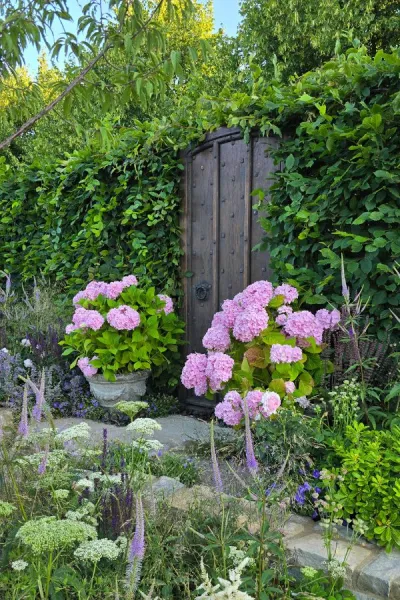
Garden Ideas from RHS Hampton Court That You Can Use at Home
The RHS Hampton Court 2025 Garden Festival had some lovely ideas that we can try in our own gardens.
Whether your style is natural and romantic or more sleek and modern, here are some practical takeaways that could work in your garden, whatever its size.
The most dominant planting theme at RHS Hampton Court 2025 was cottage garden planting.
Admittedly, this is a broad church. It can mean anything from soft colour-themed borders to exuberant mixes of classic favourites.
Cottage garden style is informal, romantic and personal. You don’t have to follow rigid planting rules like “threes and fives.” It can be wispy with flowers popping up here and there, or full and bursting with colour.
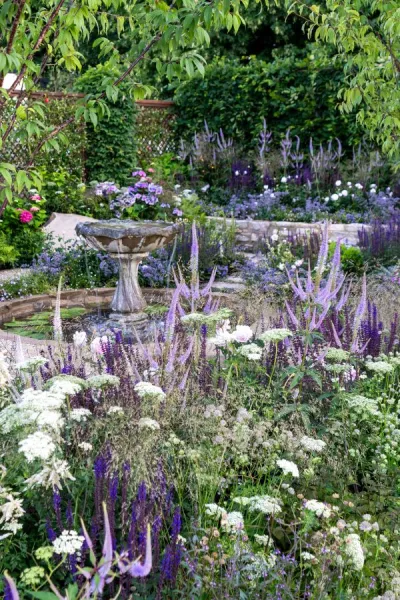
Inspiration came from gardens like The Three Graces of Galicia—with its pretty blues, pinks and whites—and the bold, cheerful display on the Hardy’s Cottage Garden Plants stand.
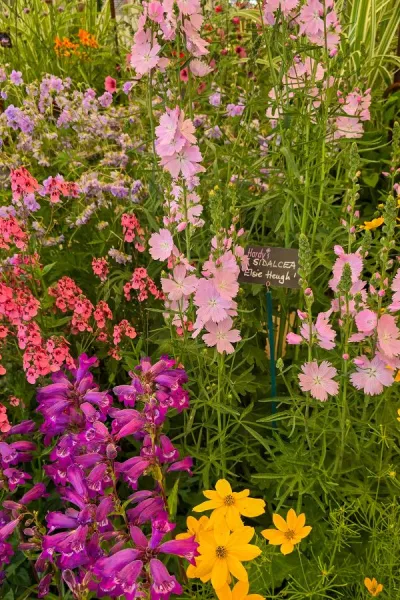
The key is to use plants that grow well where you live—often easy to find, affordable, self-seeding and pollinator-friendly. That’s what makes this a sustainable and achievable look for any gardener.
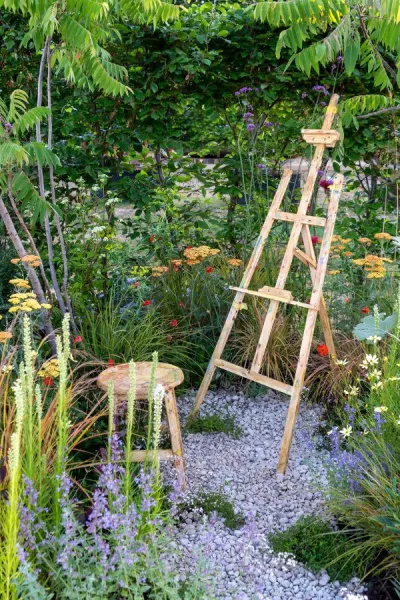
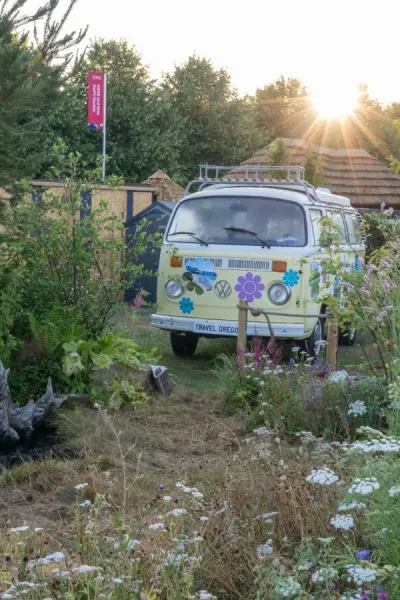
Add a Splash of White for a Fresh Look
There were also show gardens where the theme was predominantly green, with splashes of white.
This is a serene and contemporary look. It’s also quite low maintenance because foliage is less work than flowers.
White and green combinations, in particular, looked smart and contemporary throughout the gardens. It’s a simple approach that looks instantly very effective.
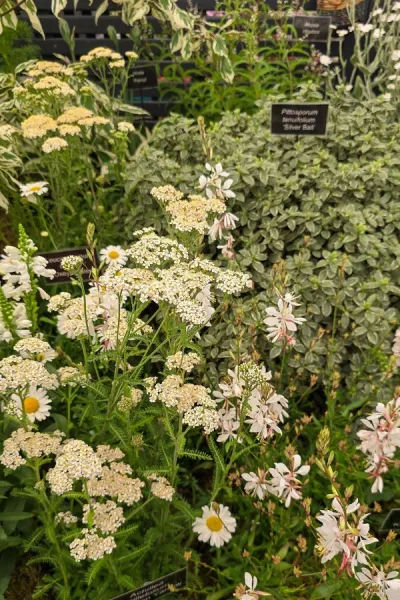
Use Deep Reds and Bronze for Bold Foliage Contrast
While most planting was romantic and soft, a few gardens introduced vivid colour with striking red and bronze tones. Illusion 2050 by Kitti Kovacs used a dark red tree (Cercis canadensis) for bold impact.
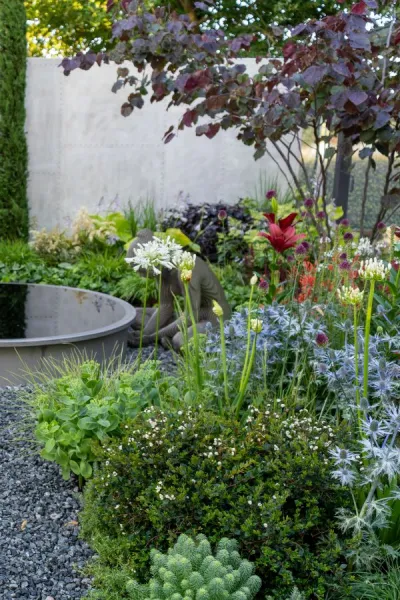
So look out for plants like Berberis ‘Rose Glow’ from Burncoose Nurseries and deep-toned acers from Norfield Nurseries. These add contrast, texture and drama to your borders.
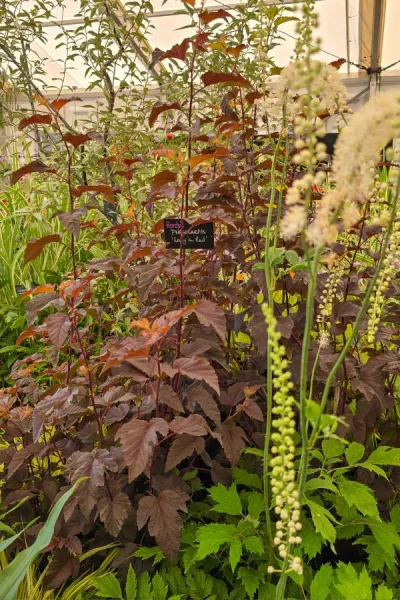
Re-Discover Ferns for Structure and Resilience
One of the standout plants at RHS Hampton Court 2025 was ferns. They’re sculptural, surprisingly tough, and ideal for everything from shady corners to sun-exposed spots.
The labels on the plants at Alchemy Ferns highlighted how adaptable they are—many cope with both damp and dry conditions, and sun as well as shade. With weather all over the world lurching from heat waves to flooding, we are all looking for resilient plants.
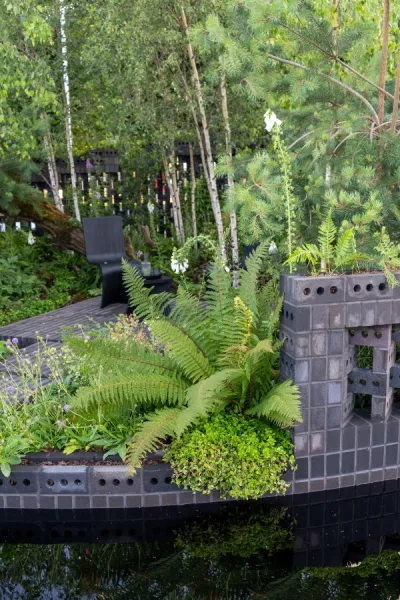
And ferns work in gardens with very different styles: from the conceptual Subaru Garden and naturalistic Travel Oregon, to the romantic Three Graces of Galicia and modern A Garden of Two Tales.
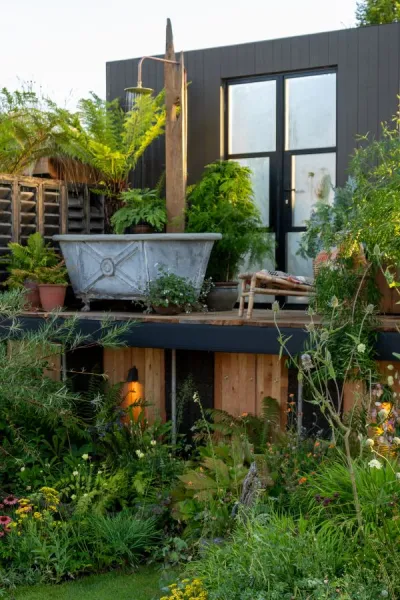
Use Logs or Stumps Creatively
Logs and stumps were used in a number of gardens—not just for edging, but also as features and plant displays.
In the RHS RSPB Swifts Garden, logs highlighted habitat loss.
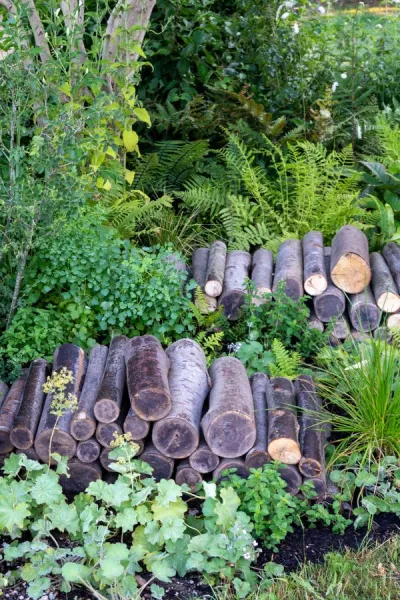
In the Woodland Edge Garden by Nicholas Navarro Garden Design, they became rustic border edging.
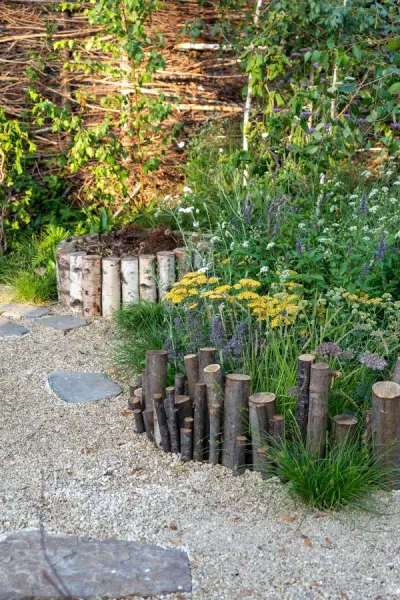
And you can take this further by creating a mini stumpery. Raising up small plants means you’ll enjoy them more. For inspiration, see the dieramas in the Floral Marquee and the national collection of santolina on the Hardy Plant Society stand.
Both rocks and stumps can be used to raise plants up in order to display them.
Break Up Paving for a Softer, Cooler Surface
More people are replacing their lawns with planting, especially in smaller gardens. But large areas of paving are expensive, get hot and are not environmentally friendly.
The answer is to make sure that paving and other surfaces are permeable and to break them up. This also looks attractive.
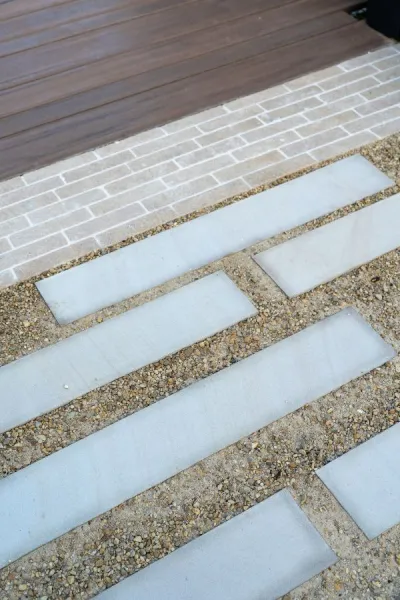
Several show gardens at RHS Hampton Court 2025 broke up paving with gravel, bark or planting—creating a softer, more natural look and improving water runoff.
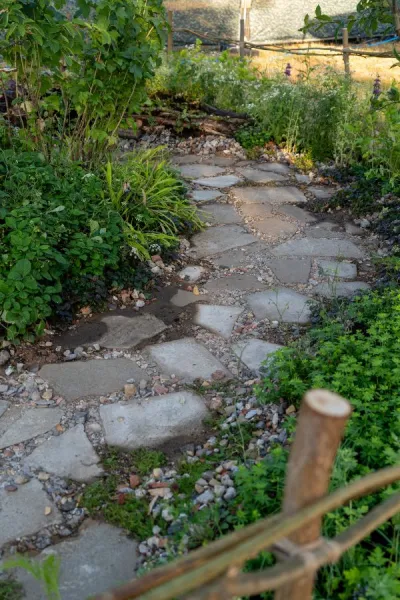
Crazy paving’ made a comeback in the Aster of Senses garden by Yoni Carnice and the National City Park Rangers. They reused broken pavers and set them in crushed concrete—an environmentally friendly idea to borrow.
Add Not One Pond, But Several
This year’s show gardens don’t add just one pond. Several at RHS Hampton Court 2025 included multiple water features—small, raised ponds linked by simple rills or waterfalls.
In A Garden of Two Tales by Daniel March, round ponds were set into the design with copper taps and shallow streams underneath. Raising tree canopies was another smart idea in this garden, creating more light and space without losing the trees entirely.
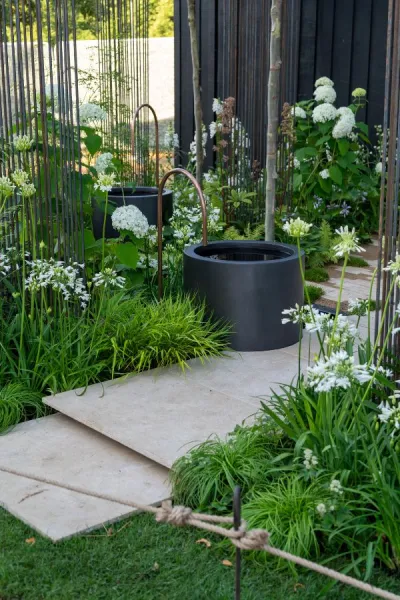
Even small water features can help wildlife, cool the garden and add a restful feel.
