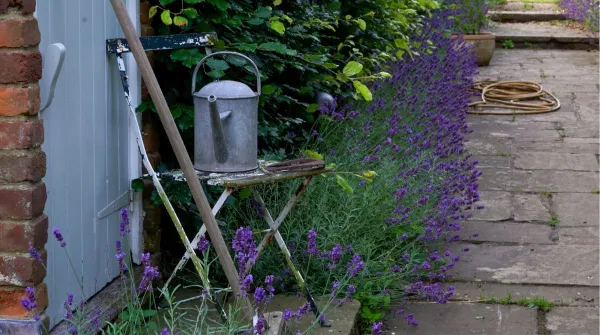
Garden Watering Strategies – How to Save Time, Effort and Money!
Think garden watering means lugging heavy cans or wrestling with a tangled hose? Think again.
Most of us water more than we need to—and often in ways that waste time, money and precious resources. But what if you could teach your plants to thrive with less?
To find out how, I went to RHS Wisley, home to the UK’s leading horticultural research centre: RHS Hilltop. It’s where cutting-edge gardening science is turning long-held beliefs on their head.
There, I met Janet Manning, the Royal Horticultural Society’s Water Management Horticultural Consultant. Janet doesn’t just know how to save water—she knows how to help plants use less of it. From clever soil techniques to simple changes in routine, her advice is rooted in years of research and real-world trials.
Whether you’re facing hosepipe bans, dry spells or just want to make gardening more sustainable, this expert advice could change the way you water your garden forever.
How to water your garden efficiently
Start with your soil,’ says Janet. ‘Your soil is the biggest reservoir of water in your garden.’
‘Starting with your soil’ means feeding it with mulch. There are so many micro-organisms in soil. They feed on the mulch, breaking it down. The process means that the soil retains water better and plants can access nutrients.
People think you can’t mulch in a drought,’ says Janet. ‘But provided you use a chunky or straw based mulch that allows the water to flow down to the roots below, then you can mulch at any time.’
She explains that a fine mulch, such as a well-rotted garden compost or similar commercial mulch will retain water on the top layer. On a hot dry day, it will evaporate from the top layer, so the moisture never gets the chance to reach the roots below.
However, if you use a mulch that allows water through, such as one that has larger chunks of material than the soil beneath it (such as a rough straw-based mulch or bark chips), then the water will drain through. And the protective layer of chunky mulch will also slow down evaporation on a hot day.
It all means less garden watering.
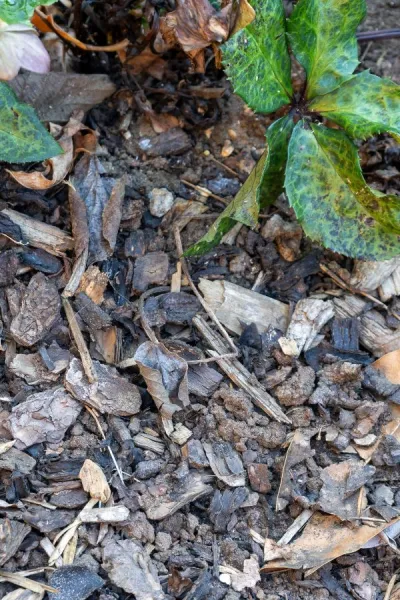
‘If you can capture the water in your soil, then you won’t have to carry it around all the time,’ she says. ‘And there are lots of other reasons for mulching. It helps suppress weeds and helps insulate plant roots from heat or cold.’
How often should you mulch to minimise garden watering?
There’s no exact answer to this.
Janet says that in hot weather, the soil and its micro-organisms will speed up, so the mulch may be absorbed into the soil faster. If your mulch seems to have disappeared, then you can add more.
However, remember to add chunky mulch in hot weather, not the finer mulch.
Janet suggests that early spring or autumn is the best time to spread a layer of finer mulch on your soil. The soil should be naturally damp in spring or autumn. However, if you’re having an exceptionally dry spring, then bear this in mind when choosing which mulch to spread.
Different gardeners have different approaches to mulch. See which one fits your gardening style:
- Charles Dowding adds a couple of inches of mulch once a year.
- Frances Moskovits also mulches once a year in autumn, but she adds up to 2ft of mulch.
- Richard and Lesley keep their garden mulch topped up on an ongoing basis. They have a sloping garden and use wood chippings from the local arborists. Mulch is essential to help prevent the water from just running down the slope.
- Anne Wareham & Charles Hawes use ‘chop and drop’ – they cut down perennials at the end of winter and let the foliage act as mulch: See The Low Maintenance Garden That Still Looks Fabulous.
How to train your plants to need less water
Plants act like water pumps, explains Janet. They take up moisture from the soil and put it out into the atmosphere with their leaves.
When there is more water in the soil, they’ll increase that activity. And when there’s less water, they’ll also detect that and slow the process down. ‘They’ll close the little holes in their leaves called stomata.’ This reduces their need to take up water from the soil. ‘And they’ll only do that when the soil is quite dry,’ says Janet.
‘So if you keep topping your plants up with water, they’ll continue to use it at a higher rate. But if you water less – for example, by extending the times between watering – the plants will use less water.’
Since talking to Janet, I’ve planted several new perennials in my border. I used to water new plants about three or four times a week in summer to get them established.
But this year, I’ve checked the soil around the plants and have decided they don’t need quite so much water. I’m now watering once or twice a week, depending on whether we’ve had any rain. And they seem to be thriving more than usual!
Right plant, right place…will save you watering
It always sounds obvious, but if you plant plants where they like to grow, then you won’t need to fuss over them.
‘If you plant a shade-loving plant in a sunny spot, you’ll need to water it much more often to keep it from dying,’ says Janet.
So think about sun and shade. Don’t forget to consider how damp or dry your soil is.
If a plant seems to be dying from heat or drought, and you think it’s in the wrong place, don’t move it in the summer. Water it regularly and move it in the autumn/fall when the soil is damp and the hot weather is over.
How often should you water the garden in summer?
There’s no exact answer to many questions about garden watering because some summers are drier and hotter than others.
You may have seen advice to water plants with the ‘same amount of water each time.’ This makes no sense because of the variation in the weather and the fact that plants themselves vary in how much water they take up.
Pots, annuals and vegetables need more watering than perennials and shrubs. Small pots need more frequent watering than large ones.
So if you want to know when to water your garden, feel the soil or use a moisture meter.
If it’s dry or dusty an inch or so down, it’ll need watering. If your soil still feels springy and slightly damp, it doesn’t need watering.
It’s the same principle as you use when deciding when to water house plants. Poke a finger into the soil. You’ll be able to tell if your soil is too wet or too dry for watering.
There are three important principles of garden watering. Mulch your soil, plant the right plants for the conditions and check the soil before watering. You’ll be able to tell if your soil is too dry (or too wet).
Are water butts & rain barrels worth it?
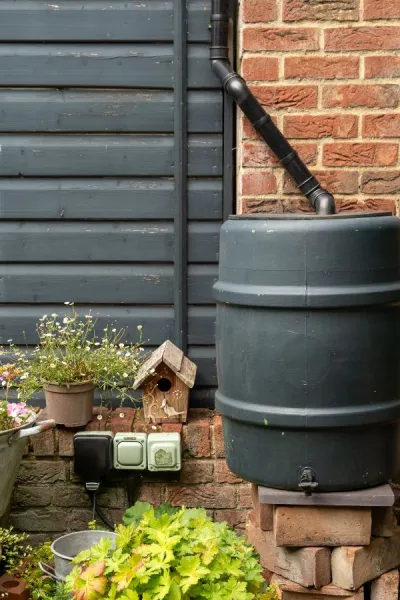
Is it worth getting a water butt or rain barrel? Yes, says Janet. Get as many water butts/rain barrels as you can. And buy them as big as you can.
Not only is rainwater free, but rainwater is better than tap water for plants. Tap water is often buffered to keep the pH at a certain level, in order to preserve pipes and other equipment. As rainwater runs through the soil, it will pick up the pH of that soil.
And rainwater used on your garden won’t be going into the drains and adding to flash flooding in your street.
You can fill them with water from a shed roof or your main roof. To prevent flooding when the barrels are full, install a rainwater diverter, which will re-direct rainwater down the drains until your water butt has space again.
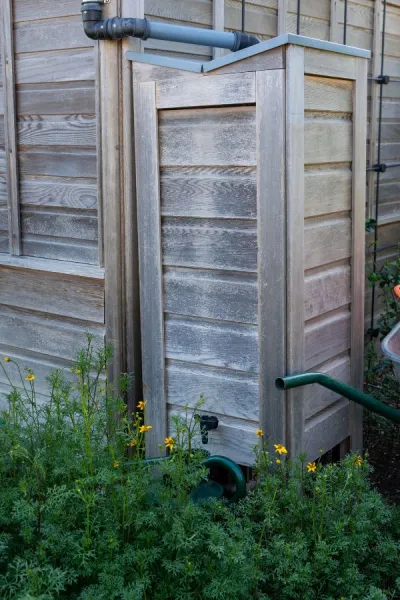
Read the instructions about positioning the rainwater diverter, however. Janet says that placing it too high is a common mistake! ‘It needs to be on a level with the water butt/rain barrel, not above it or you’ll get rainwater from the roof flooding your terrace.’
Another common mistake is to leave the tap open. The ‘open/’shut’ signage on the tap isn’t always clear, so if you’re wondering why the water butt never fills, then this may be the reason!
It’s also important to make sure that the lid is firm and that it doesn’t flip. Birds and small mammals could fall in and drown.
You can also install a series of rain barrels/water butts by using lengths of hosepipe to connect them and siphon the water between them.
Provided that you drop the hosepipe to the bottom of the water butts and fill all the butts at once, they will operate as one after that. You’ll need to research this and check levels, but it will save quite a bit of staggering around the garden with watering cans.
Is rainwater harvesting legal?
Rainwater harvesting is using a tank, water butt or rain barrel to harvest rainwater, usually from your roof. Some people think that this is illegal in some countries, for example, the UK.
But that’s a myth – or rather it’s a misunderstanding. You are encouraged to do rainwater harvesting for garden watering.
But you should not use harvested rainwater for drinking and it would be illegal to sell it.
Is it worth getting an irrigation system?
Janet suggests that you examine whether you really need one. If, for example, you have a lot of pots or a greenhouse full of seed trays, then they will always need regular watering. Vegetables, too, may need more water as they grow very fast.
But if you plant the right plants in flower borders and keep your soil in good condition, you’ll only need to water in the borders when establishing new plants. And you’ll only need to water those new plants, not the whole border.
‘Irrigation systems, like everything, need management,’ she advises. Plants need different amounts of water, depending on the weather, so you can’t necessarily just set it and forget it.
Maintenance is another issue. Lots of pipes with joins are always going to need repairs at some point.
Can I water my garden with grey water?
Yes, and we will have to use more grey water for garden watering in the future, says Janet.
Grey water’ is water that has already been used for another purpose in the house. It could be your leftover shower and bath water or the water you’ve used for other washing, such as laundry or cooking.
Water from toilets is called ‘black water’ and cannot be used in the garden.
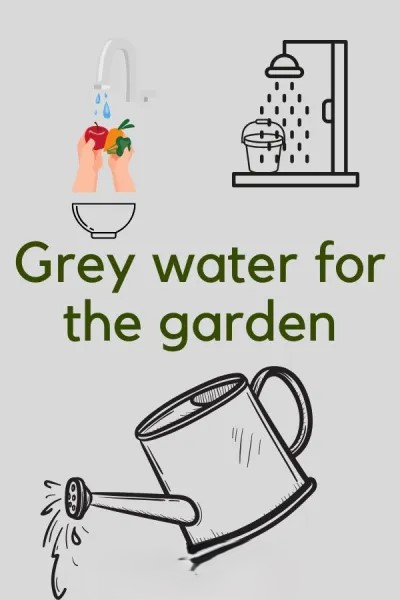
Janet keeps a small bowl in her kitchen sink so that water used for rinsing or washing vegetables is retained for use on the garden.
Grey water that contains soap is not good for plants as their roots don’t like the sodium in soap. However, plants can tolerate it for a while. And there is lots of grey water that has little or no soap in it. For example, the water wasted while the shower heats up or the water extracted from a condenser dryer.
And if you’re washing or preparing fruit or vegetables, then that water – including the peelings – can go straight on the garden.
In the UK, we are predicted to be short of the water we’ll need by about one third by 2050. That means everyone using one third less water than we do now. Many countries are already much more water aware than we are.
So we will have to learn to use less water and re-use water.
Should I water my garden in the morning or the evening?
As the late, great plantsman, Christopher Lloyd was fond of saying – there’s a ‘best time’ to do a gardening chore. And there’s a ‘second best time’ – which is when you’ve got time to do it.
The RHS says that watering in the early morning is generally best so that plants can absorb the water before it evaporates in the hot sun.
But you can also water in the evening, they say.
So whatever fits into your routine is best.
Watering in the middle of the day is generally considered the least efficient time to water, because the water may evaporate. Plants also take up water faster in the heat.
We genuinely hope that you found our article helpful,Happy Reading!
