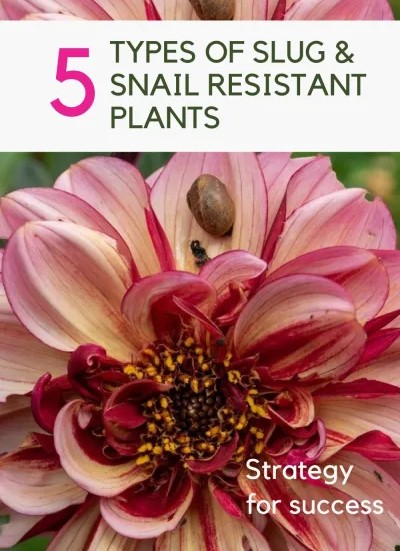
5 types of slug resistant plants – the easy way to beat snails and slugs in the garden
Planting slug resistant plants is the most effective way of stopping slugs and snails from devouring your garden.
You may have read articles or seen advertisements promising that you can get rid of slugs and snails permanently.
But you can’t. Slugs and snails will always return, no matter what you use.
Garden snails were imported as food into Northern Europe by the Roman Empire and have since spread all over the world. Slugs, too, are similar worldwide because they’ve travelled on plants. Gardeners everywhere have been trying get rid of them permanently for thousands of years. They haven’t succeeded.
However, you can minimise their ability to cause damage. So I talked to Stephen Ryan, of The Horti-Culturalists YouTube channel, who also has a nursery selling rare plants called Dicksonia Rare Plants.
If you’re in the nursery business, you really do need to make sure that slugs and snails don’t eat your profits!
What is the best deterrent to slugs and snails in the garden?
There is NO single ‘best deterrent’ for slugs and snails in your garden.
You need to think about a ‘strategy’ rather than a single product or action.
If you have a wet summer, then you’ll have more slugs and snails than usual. However, gardens where there is a multi-pronged strategy always report less slug and snail damage than those who rely on slug pellets alone.
Find your complete anti-snail and slug strategy in ‘Controlling slugs & snails – start now for summer success!‘
The strategy starts with choosing at least some slug and snail resistant plants. Then protect your vulnerable plants by keeping them in pots until they’re big enough to resist slug and snail damage. Create a wildlife friendly garden. And use organically approved slug pellets (made of ferric phosphate or iron phosphate) very sparingly. Don’t use other chemicals.
Snail and slug resistant plants
Start your anti-slug strategy with resistant plants. There are lots of them.
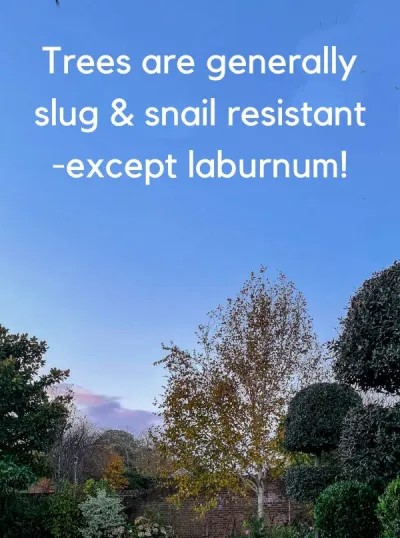
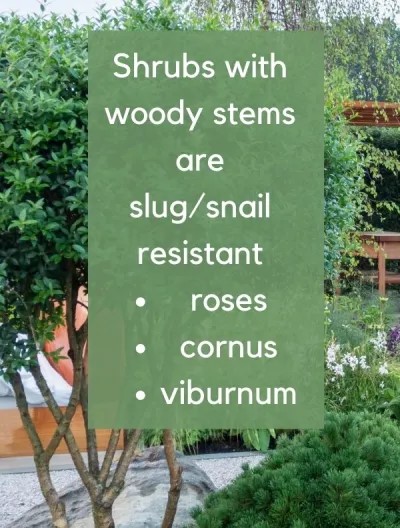
- Most woody shrubs and trees (especially conifers!)
- Plants with hard, often shiny, leaves (camellias, rhododendrons, azaleas, mahonia)
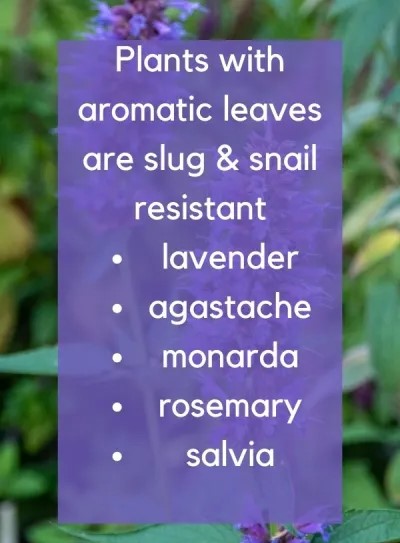
- Plants with resinous, herb-flavoured leaves (lavender, rosemary, salvia, monarda, agastache, teucrium).
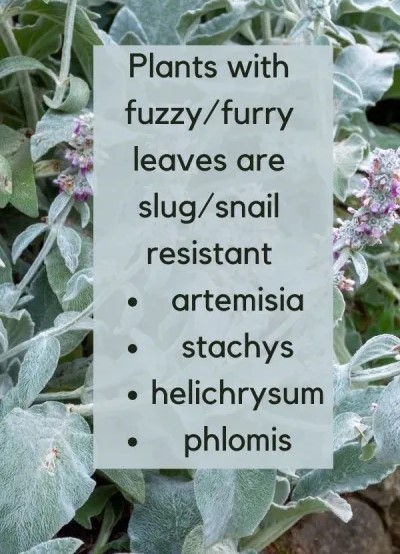
- Plants with furry/fuzzy leaves (artemisia, helichrysum, phlomis, stachys)
- Roses are generally slug/snail resistant. Their leaves are relatively high off the ground when they emerge in the spring.
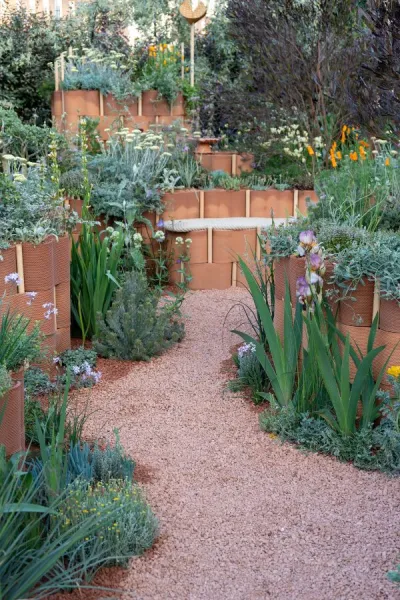
Mix slug resistant plants with vulnerable ones to minimise damage
Stephen says that mixing up slug resistant plants with vulnerable ones will help reduce slug and snail damage.
If you have a whole row or border full of one kind of tasty plant, it’s much easier for slugs and snails to chomp through them all overnight. Generally plants with soft, nutritious leaves are the ones the slugs and snails will go for. Plants that slugs and snails love include:
- Lilies
- Cannas
- Hostas
- Dahlias
- Delphiniums
- Leafy green veg and salads
- All 2000 varieties of the pea family.
How to get rid of slugs and snails naturally
As we reported in Gardening For Biodiversity, scientific tests at the Royal Horticultural Society showed that barrier methods don’t seem to stop slugs and snails eating your plants.
Barrier methods include putting a copper ring around plants or surrounding them with horticultural grit, crushed eggshells or coffee grounds.
The RHS say this is because slugs can burrow underground and therefore bypass the barriers.
Stephen says that he has found copper to work, but in specific ways: ‘If you put a copper ring round a plant, bury several inches of the ring into the earth, so the slugs can’t burrow under it,’ he advises.
He also found a copper spray that worked on the rim of pots but it is no longer commercially available.
Many people swear by barrier methods and there will probably be more research into them at the RHS.
Put pots on shelves to keep them away from slugs and snails
Stephen has found that putting plants in pots on shelving helps deter the slugs and snails.
The RHS agrees with this. Helen Bostock, their Senior Wildlife Specialist, says that slugs and snails can climb, but they often won’t bother.
Stephen uses galvanised metal framed stands because they can withstand rain and slugs and snails don’t like climbing them. You could also use ornamental metal shelving.
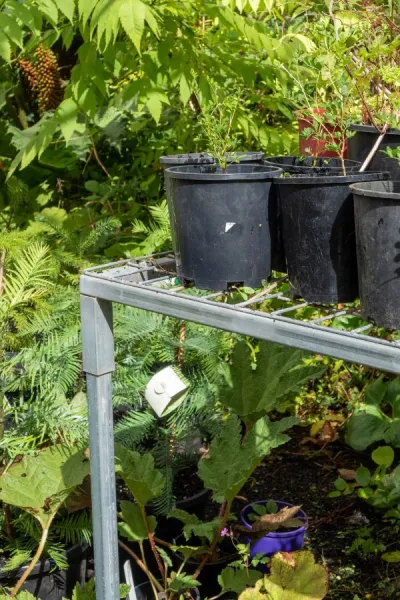
However, pots themselves offer a good habitat for slugs and snails. Stephen says he can pick up any pot in his nursery and find a slug sheltering under it during the day. So check the bottom of the pot before putting it on the shelf!
And Huw Richards advises you not to keep plants in pots near the veg growing area for the same reason.
Protect young plants from slugs and snails
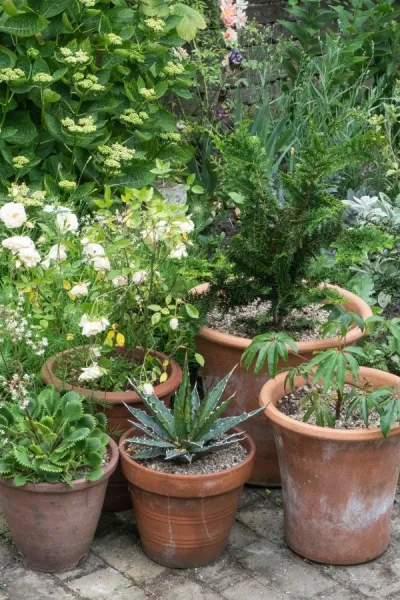
If you can protect tender plants, such as dahlias, cannas and delphiniums, when they are young, then a few nibbled leaves matters less when they are older.
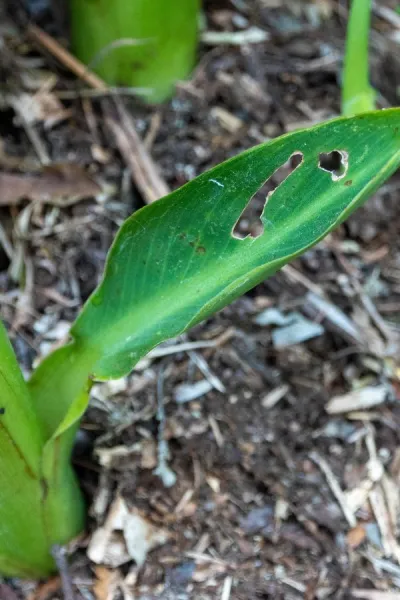
Stephen advises growing these plants on in pots, on shelves, until they’re big enough to withstand some nibbling. When you plant them out, they may have some holes in the leaves at the bottom, but the flower display at the top should still be good.
If you’re growing tender plants in the ground, you can buy organically approved slug pellets containing ferric phosphate. Use just a few around very young plants as they come up. Many people say that even though these slug pellets won’t harm birds or pets, they are still damaging to soil organisms.
Late season plants can be more slug resistant
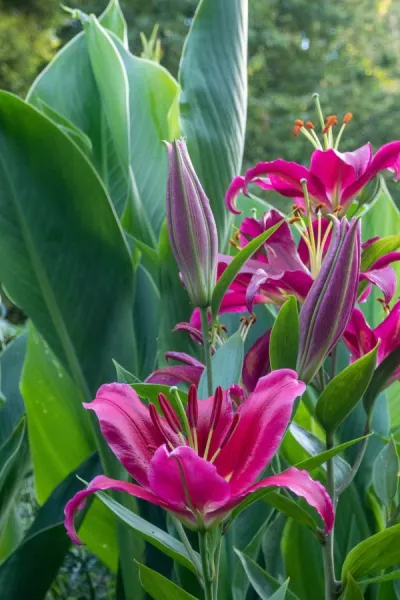
If you get a hot, dry summer, then slugs and snails retreat into walls and under stones. They become much less active. So plants which do most of their growing and flowering later in the summer may escape the worst of the slug damage. This includes dahlias and cannas.
Natural predators of slugs and snails
One way of keeping slugs and snails down is to encourage their predators by making your garden more wildlife friendly. This means leaving some grass long, leaving piles of leaves and twigs, not using chemicals, and having a good range of trees, plants and flowers to provide food and shelter.
You can also keep ducks and chickens who will enjoy the molluscs. However, chickens are omnivores and likely to eat your garden plants, too. Ducks are less likely to cause damage, so are better natural pest control. But they will still go for anything particularly young and tender.
But, above all, the most effective way of encouraging natural predators is to avoid anti-pest sprays. Ground beetles are beneficial insects that often eat slugs and snails. They can be killed by toxic sprays or non-organic slug pellets. And birds, too, will thrive if there are bugs in the garden they can eat. It’s all about balance. If you tolerate some damage, then you’ll get some help from nature.
Dahlia expert Sarah Raven throws mealworms into her borders in spring, so that the birds are attracted to the borders. Once they’ve eaten the mealworms, they’ll grub around for some slugs and snails. I’m going to try this and have bought these dried mealworms.
One snag is that the habitats you create by leaving grass long and leaving piles of twigs etc also create good habitats for slugs and snails.
Veg growing experts, such as YouTuber Huw Richards, will advise you to keep slugs and snails to a minimum by keeping the area around the vegetable beds tidy, with short grass.
It’s a dilemma. If you have enough space, maybe keep the wildlife friendly area away from the veg beds?
Other garden pests and how to deal with them
If you want to make a minimum use of chemicals in your garden, then it’s important to be able to identify the pests and to know when chemicals really do have to be used in order to keep them under control.
It’s also worth remembering that household remedies, such as salt or vinegar, have been manufactured – they’re not wholly ‘natural’. If something is effective enough to kill off pests, it is also potentially powerful enough to do other damage. It’s important to find out what that damage could be. Only then can you can decide if the remedy is worth trying or whether it could create more problems than it solves.
For example, sprinkling lots of salt across your soil against snails will also damage your soil. When it rains, the salt will dissolve into the soil and affect the way plants grow. In some countries, it’s illegal to use road salt on gardens for this reason.
