
The best way to tidy a garden shed is to empty it completely, keep only tools you actually use, and put daily-use equipment between waist and shoulder height. I have tried the pretty-box approach, the “put it somewhere for now” approach, and the heroic spring clean that collapses by June. A simple layout based on frequency of use lasts much longer.
Prices move between retailers, so treat the figures below as 2026 budgeting guides rather than fixed promises. The useful part is the size, load rating and storage role.
How to Empty a Garden Shed Without Losing Useful Tools
Do not start by buying hooks. Start with an empty floor and a clear view of every item. A shed feels overcrowded because tools have been layered on top of one another for months, but the real problem is usually duplication, damp damage and equipment that belongs somewhere else.
Make four sorting groups before cleaning
Take everything outside and create four groups: use every week, use once or twice a season, repair, and remove. The first group includes secateurs, hand forks, gloves, watering fittings and the tools needed for current jobs. Seasonal items such as bulb planters and fruit nets can live higher up. Broken handles, rusty blades and mystery parts need a decision, not a permanent corner.
Keep a small box for items that belong in the house, garage or greenhouse. I usually find spare screws, plant labels, old batteries and half-used cleaning products in the shed. Moving them out gives you more useful space without spending a penny.
Clean the structure before returning anything
Sweep the floor, brush cobwebs from the roof line and wipe shelves with a barely damp cloth. Check the roof felt, door threshold and corners for wet patches. A shed that smells musty needs an airflow solution before it needs new storage. Leave the door open on a dry day, allow tools to dry fully, and measure the usable wall space after the cleaning is finished.
Which Shed Layout Makes Tools Easy to Grab?
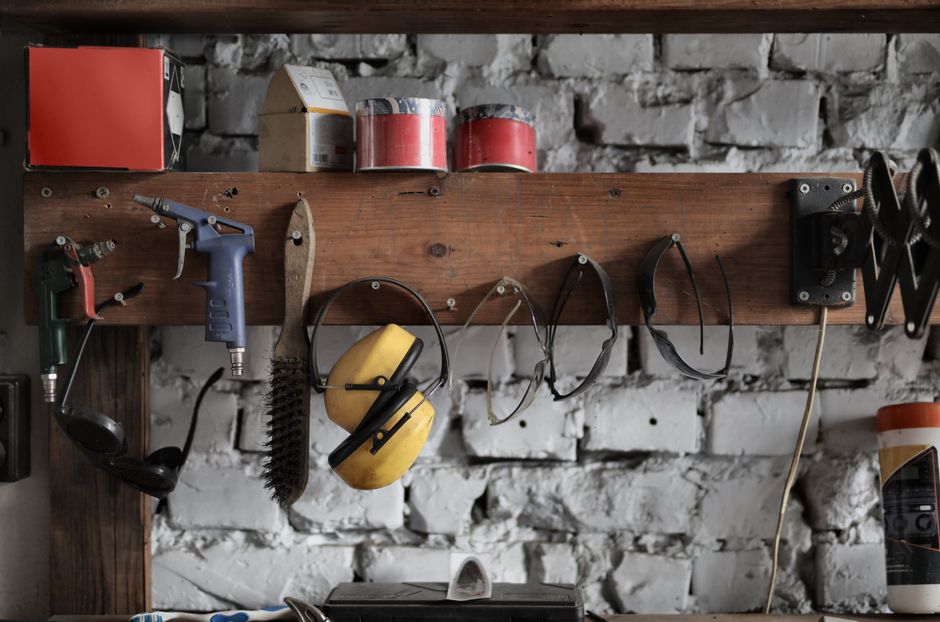
The layout I recommend is a three-zone wall: daily tools at hand height, occasional tools above them, and awkward or heavy items low down. This keeps the floor clear for a mower, trug or wheelbarrow and stops you dragging six tools outside to reach one trowel.
Build a daily-use zone by the door
Put the tools you reach for every week within one step of the entrance. Hang secateurs, a hand fork, a dibber, gloves and a small watering can on the nearest wall. Use hooks that leave a visible gap between handles; tightly packed tools turn into a wooden curtain that hides whatever sits behind it.
Keep sharp blades facing down or towards the wall, with guards fitted where the manufacturer supplies them. Store gloves on a hook rather than in a pile, because damp gloves quickly develop an unpleasant smell and lose their shape.
Keep heavy and long tools low
Spades, forks, rakes and hoes should stand in a rack or hang from strong brackets, with the working ends safely controlled. Do not lean them loosely in a corner. One falling rake can damage a greenhouse pane, and a row of leaning tools usually slides across the door as soon as you remove one.
Leave at least 60cm of clear walking space in front of shelves if the shed allows it. In a small 6ft by 4ft shed, one full-height wall system is usually better than shallow storage on every wall.
Shed Storage Ideas Compared: What Earns Wall Space?
There is no prize for filling every inch of wall. The best storage is the system that makes tools visible and leaves enough spare capacity for the next season. This is how I judge the common options.
Compare the main storage types
| Storage type | Best use | Typical cost | Main drawback |
|---|---|---|---|
| Wall hooks | Long-handled tools and hoses | £8–£25 for a small set | Needs solid fixing points |
| Pegboard | Small tools, clips and seed packets | £15–£40 | Accessories add to the final cost |
| Freestanding shelf | Pots, compost and boxes | £35–£100 | Uses valuable floor space |
| Lockable garden box | Bulky items outside the shed | £150–£300 | Not ideal for damp-sensitive tools |
My clear winner for small tools
For trowels, labels, twine and gloves, the IKEA SKÅDIS pegboard is the best-value starting point I have found. The 76 x 56cm board is listed at about £15, while a seven-piece accessory set is around £9. It is easy to rearrange when your planting habits change, but it needs a properly fixed backing and the accessories can cost more than the board.
My clear winner for long-handled tools
For a serious collection of spades and forks, choose the GARDENA Tool Rack Plus rather than a row of cheap plastic clips. Model 3509-20 carries up to 60kg in total, with holders rated for up to 10kg each and a universal hook for heavier equipment. It costs more, but the aluminium rail and adjustable layout make it a better long-term choice for a busy shed.
Best Garden Shed Storage Products for 2026

I would not buy a complete matching storage range. Mix one strong wall rack with low-cost containers and a single shelf. That gives you capacity where it matters instead of a shed full of identical boxes that hide what is inside.
Best budget wall system: IKEA SKÅDIS
The IKEA SKÅDIS 76 x 56cm board is my pick for gardeners who own lots of small hand tools. At roughly £15 for the board, it is cheaper than most dedicated garden pegboards. Add the £9 seven-piece set only after you know which items need a hook, cup or shelf. Its weakness is load capacity: do not hang a full watering can or heavy power tool from it.
Best heavy-tool rack: GARDENA Tool Rack Plus
The GARDENA Tool Rack Plus 3509-20 suits a shed with long-handled tools, a hedge trimmer or several combisystem attachments. The rail supports up to 60kg, the holders can take up to 10kg each, and the rack has a 25-year warranty after registration. UK prices often sit around £70, so I would buy it only when cheaper hooks have already failed or you have enough equipment to justify the load rating.
Best external overflow: Keter Store It Out Midi
The Keter Store It Out Midi gives about 845 litres of lockable outdoor storage and works well for empty pots, garden cushions, hose equipment and a folded wheelbarrow. Typical UK pricing is around £180. I would not use it for secateurs, seed packets or anything that must stay dry in a fluctuating outdoor temperature. It is an overflow box, not a replacement for a well-ventilated shed.
The Biggest Garden Shed Tidying Mistake Is Buying Storage First

Do not make the floor your filing system
My strongest view is simple: buy storage only after measuring, because a £30 shelf that blocks the door or leaves no room for a mower has made the shed worse, not better, and I have learned that the most expensive part of a storage project is often the second round of brackets, replacement boxes and hurried returns after the first layout fails.
Do not buy a bigger box for a smaller problem
If the shed is full of duplicate tools, empty compost bags, broken pots and projects you have not touched for three years, a larger cabinet will only hide the same problem and make the next clear-out harder; sort first, set a limit for each category, and only then add one storage item that solves a measured gap, because a tidy shed comes from fewer decisions on the floor rather than more plastic around them.
When to Repair the Shed Instead of Buying More Storage
Storage cannot fix a shed with a failing roof, a swollen door or a floor that holds water. Before spending £200 on boxes and racks, check whether the building itself is stealing usable space and damaging the tools you are trying to organise.
Repair these problems before adding shelves
Repair a leaking roof, replace rotten floor sections and improve the door threshold first. If the floor is uneven, a freestanding shelf may rock, while wall-mounted storage can pull away from damp or soft boards. A sound base gives every later storage choice a fair chance.
For a small timber shed that needs a new roof, floor and door, compare the repair cost with replacement. A compact resin model such as the Keter Manor 4 x 3 has a footprint of roughly 1.2 x 0.9m and suits tight spaces, but it will not give the same fixings or workshop feel as a sound timber shed.
Know when a storage box is the better answer
Buy a separate box when the shed is structurally fine but overloaded with cushions, children’s garden toys or bulky seasonal items. The Keter Store It Out Midi is useful for that job, while a wall rack is better for tools you need to see and grab. My final rule is repair before replacing when the structure is sound, but stop investing in storage when damp, unsafe fixings or a failing floor are the real reason nothing stays tidy.