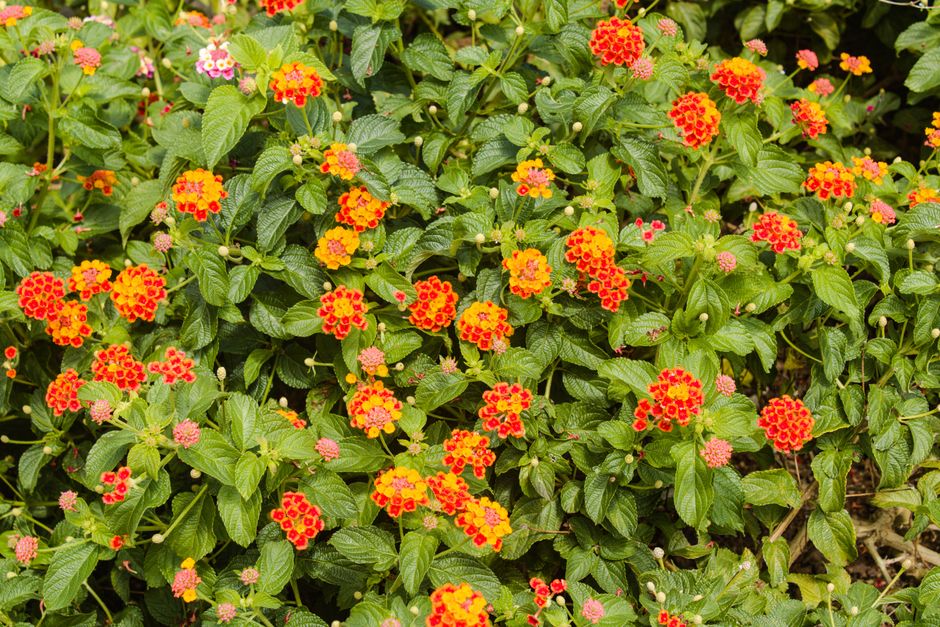
Your border looked full of promise in June. By late July, the flowers are brown, the stems are floppy, and the whole bed looks tired from the path. You water it. You feed it. You wonder why it has stopped performing.
The problem is often simple: the plants are making seeds instead of new flowers. A good deadheading strategy interrupts that process at the right time. It does not mean cutting everything down every day. It means knowing which flowers to remove, where to cut, and when to stop.
How often should you deadhead flowers?
Check high-output plants twice a week
The best rhythm is twice a week for roses, dahlias, marigolds, zinnias, cosmos, and container plants. A Tuesday and Saturday check catches most spent blooms before they turn into seed heads. This takes less time than one large cleanup at the end of the month.
Match the schedule to the plant
Soft annuals can need frequent attention during hot weather. Remove individual flowers as soon as they fade. Roses usually need a deeper look every five to seven days during a strong flush. Lavender, ornamental alliums, nigella, and many grasses should not be treated the same way. Their seed heads can add structure, food for birds, and winter interest.
The best routine is not daily deadheading. It is a fixed weekly route with a second check for fast bloomers. Set a timer for 12 minutes. Start with the plants closest to the path, then move outward. Stop when the timer ends and continue later in the week. That rule keeps the work small enough to repeat.
Deadhead in dry weather when possible. Wet foliage spreads disease more easily, and wet stems are harder to see. Use clean hands for soft flowers and sharp pruners for woody stems. If a plant looks stressed, remove the worst spent flowers first and leave healthy buds alone.
Where to cut each flower type
Soft-stemmed annuals
For zinnias, cosmos, marigolds, calendula, and petunias, follow the fading flower down to the first strong set of leaves. Cut 3 to 6 millimeters above that joint. Leaving a long bare stub looks untidy and gives the stem less strength. Cutting below the leaves removes useful growth and can delay the next bloom.
Pinch soft flowers with your fingers when the stem is thin. Use pruners when the plant is crowded or the stem feels stringy. Remove yellow leaves at the same time, but do not strip a plant bare. Leaves power the new growth.
Roses and other woody stems
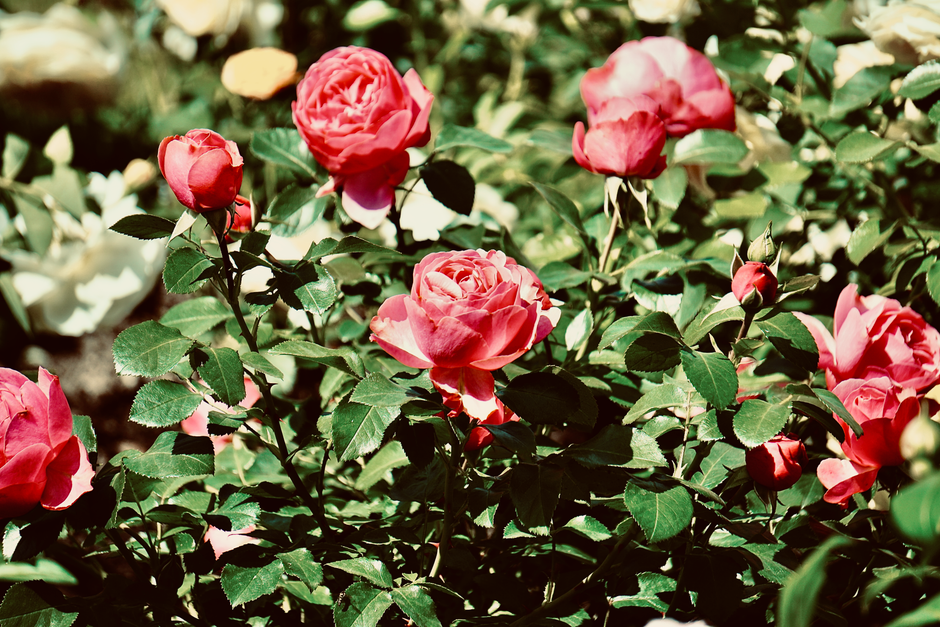
For roses, cut the spent flower back to the first leaf with five leaflets on a healthy outward-facing bud. Make the cut at a slight angle, about 6 millimeters above the bud. This directs the next shoot away from the center of the plant and reduces the chance of crossing stems.
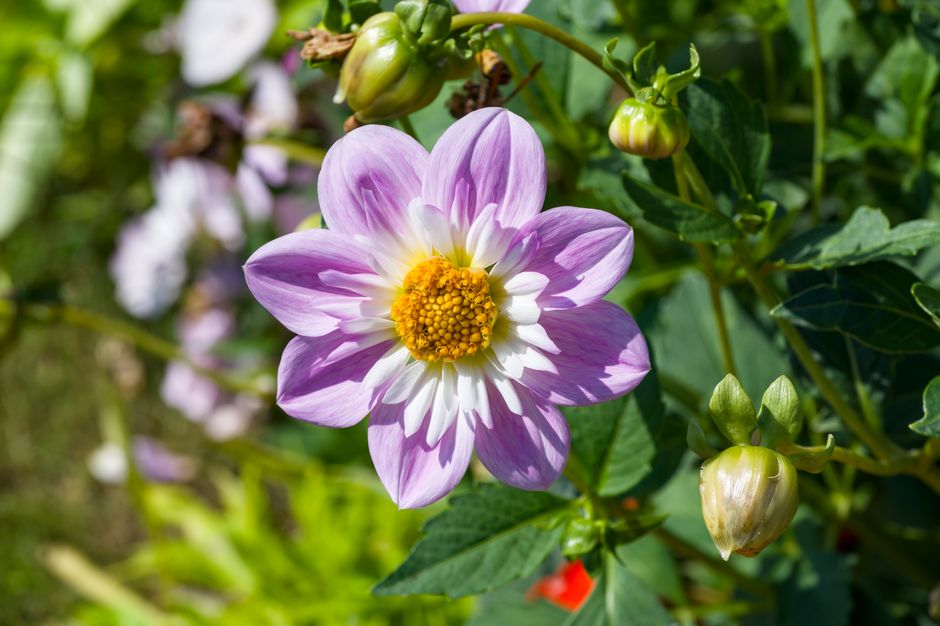
For salvias, penstemons, and other repeat-flowering perennials, remove the flower spike down to a side shoot or a strong leaf pair. For dahlias, follow the faded head down to the first branching point. Do not cut just below the flower head and leave a long hollow stem.
Plants that should keep their seed heads
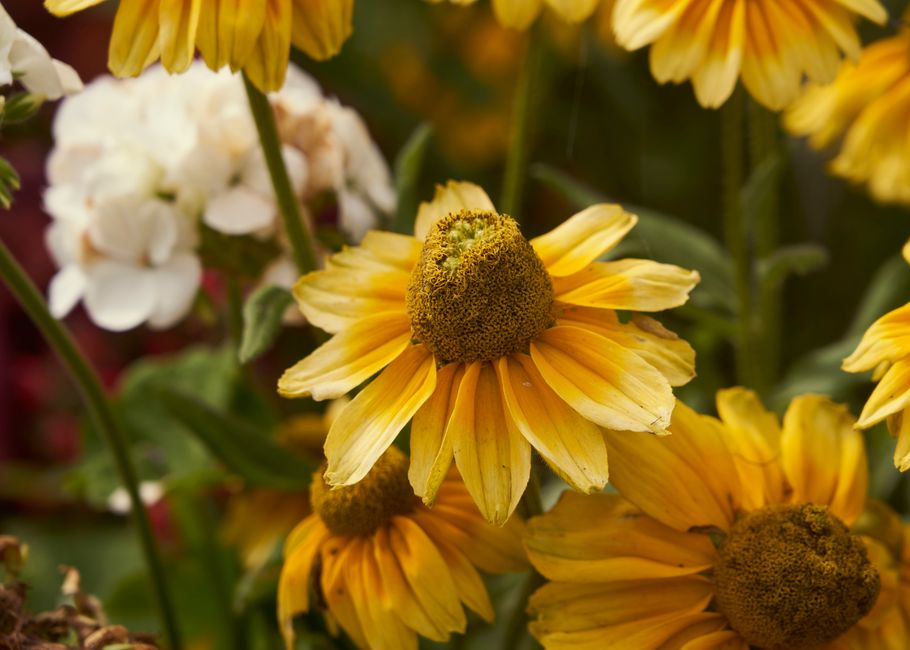
Do not deadhead every plant for the sake of neatness. Echinacea, rudbeckia, sedum, hydrangea, teasel, ornamental grasses, and many alliums can carry the border after flowering. Their seed heads feed birds and give the garden shape in autumn. Cutting everything is not better gardening. Keep the plants that provide structure, then remove only the flowers that make the border look exhausted.
Which pruners make deadheading faster?
You do not need expensive equipment for deadheading, but a poor blade makes the job irritating. The best choice is a bypass pruner with a narrow head, a sharp blade, and a lock that works with one hand. Anvil pruners crush soft stems and are better reserved for dry wood.
| Pruner | Useful specification | Best use | Verdict |
|---|---|---|---|
| Felco 2 | Bypass blade; cuts stems up to 25 mm | Frequent work across roses and shrubs | Best long-term choice for large gardens |
| Fiskars PowerGear2 Bypass Pruner | Gear-assisted cut; handles stems up to 19 mm | Repeated cuts with less hand strain | Best for gardeners with weaker grip |
| Corona ClassicCUT ComfortGEL | Bypass blade; cuts stems up to about 20 mm | Annuals, perennials, and light rose work | Best value for routine deadheading |
| Burgon & Ball RHS Endorsed Bypass Secateurs | Narrow bypass head; handles stems up to about 20 mm | Precise cuts in crowded borders | Best for careful shaping |
The tool I would pick
For a mixed border, the Corona ClassicCUT ComfortGEL is the sensible pick. You get a bypass blade, enough capacity for most flower stems, and a handle that does not feel excessive for small cuts. Choose the Fiskars PowerGear2 if hand fatigue is your main problem. Choose the Felco 2 if you also prune roses, fruit trees, and shrubs and want replaceable parts.
What not to buy
Do not buy a bulky lopper for ordinary flowers. Do not use kitchen scissors on woody stems. Do not keep using a blade that tears the bark. A ragged cut dries slowly and creates a poor starting point for new shoots. Clean sap from the blade after sticky plants and wipe it with disinfectant when moving between diseased plants.
A deadheading route that actually gets done
Use a route, not enthusiasm. Enthusiasm disappears after the first hot week. A route gives you a repeatable job with a clear stopping point.
The 12-minute summer circuit
- Start at the entrance and scan the border from left to right.
- Remove brown, collapsed, or seed-forming flowers first.
- Cut each stem back to a healthy leaf joint or side shoot.
- Place soft clippings in a bucket instead of dropping them through the foliage.
- Check the center of tall plants where hidden flowers collect.
- Stop after 12 minutes, even if a few flowers remain.
On the next visit, begin where you stopped. This prevents the familiar mistake of spending an hour on one corner while the rest of the border goes untouched.
Use three piles
Keep three simple categories in your head: remove now, leave for seed, and inspect later. Remove now means faded blooms, diseased leaves, and broken stems. Leave for seed means plants that add food or structure. Inspect later means a plant that looks weak, dry, or newly damaged. This sorting prevents over-pruning.
Water the border at soil level after a dry spell, not over the flowers. Deadheading cannot rescue a plant that is wilting every afternoon. New buds need water, light, and healthy leaves. The cut is only one part of the system.
Deadheading mistakes gardeners keep making
Should I remove every flower that looks old?
No. Remove flowers that have finished their display and are starting to form seed. Leave fresh flowers and tight buds. On echinacea, rudbeckia, sedum, and alliums, keep selected seed heads for birds and autumn shape. The right question is not whether a flower is old. Ask if removing it will create more value than leaving it.
Why did deadheading make my plant smaller?
You probably cut too far, removed too many leaves, or deadheaded a plant that blooms only once. Some perennials need their foliage to rebuild roots after flowering. Lupines, peonies, irises, and many spring bulbs are not summer repeat bloomers. Remove ugly flower stalks, but keep healthy leaves until they yellow naturally.
Can I deadhead during a heatwave?
Yes, but do it early or near sunset. Avoid heavy cutting when the plant is limp. Water the soil first, wait for the stems to recover, then remove only the spent flowers. A common failure is treating stress as a pruning problem. Heat, drought, root damage, and pests can all reduce flowering, and deadheading alone will not fix them.
Another mistake is waiting for a perfect free afternoon. Brown heads become harder to find inside dense growth, and seed pods mature quickly in hot weather. A short, imperfect check twice a week beats a heroic cleanup once a month.
When to stop deadheading for the season
Follow the plant, not the calendar
Stop routine deadheading when the plant is no longer producing useful new buds. That may happen after the first hard frost, during a long drought, or simply when a one-time perennial has finished its natural cycle. Keep seed heads that feed wildlife or hold the border together. Cut diseased material away, but leave healthy structure standing through winter when it benefits the garden.
Make the final cut purposeful
Late-season deadheading should prepare the plant for the next stage. Remove weak growth that will collapse onto neighbors. Tie tall stems that still look good. Mark plants that flowered heavily so you can divide, move, or support them next spring. The 2026 summer border should not end as a bare collection of stubs. It should shift from flower display to seed, texture, and habitat.
The strongest borders are not maintained by constant cutting. They are managed with timing. Remove the flowers that are stealing energy from the next flush, keep the seed heads that earn their space, and let the garden change character as summer moves on. That balance is where continuous color stops being a chore and becomes a design strategy.