A small garden corner can become the hottest place outdoors once brick, fences and dark paving trap July heat. The strongest solution combines overhead shade, moving air, lower-reflective surfaces and plants that can handle dry roots without looking dull.
This guide treats the project like a careful buyer comparison: measure the site, identify the heat problem, then pay for the feature that solves it.
Why a July Garden Corner Feels Hotter Than the Lawn
Heat comes from three directions
A corner beside a wall receives direct sun from above, reflected heat from the wall and stored heat from paving. A pale rendered wall can reflect light onto seating, while brick and concrete continue releasing warmth after sunset. That is why a corner may feel uncomfortable even when a nearby lawn feels usable.
The first design move is to block the high July sun before adding decoration. A roof, shade sail or leafy canopy should cover the sitting area during the hours you actually use it. For most gardens, that means checking the site from noon to 4 p.m., not only at 10 a.m. when the corner looks pleasantly cool.
Air movement matters more than thick fabric
Dense fabric can block sunlight but still create a trapped pocket of hot air. Leave open sides wherever possible. A gap between the canopy edge and a fence helps warm air escape, and a diagonal shade sail often feels cooler than a low, flat roof because it preserves more airflow.
Do not build a sealed tent around a seating area unless insects or rain are the main concern. A screened enclosure can be useful, but it needs openings on opposing sides. A small fan only helps when it moves air across skin; it does not lower the outdoor temperature by itself.
Design for shade and plant health together
People need deeper shade than many plants. A reading chair may need roughly 80 to 90 percent sun blocking, while a border of ferns, hostas and heucheras can thrive with bright filtered light. Put the tallest shade source on the side that receives the strongest afternoon sun, then keep the planting edge low enough to preserve the view.
My core verdict: build the shade layer first, then choose plants for the light left underneath. Planting first and adding a roof later often leaves the border too dark or forces expensive relocation.
How to Plan a Small Shade Sanctuary Before Buying Anything
1. Map the July sun
- Mark the corner on a simple sketch and record the shadow line at 9 a.m., noon, 3 p.m. and 6 p.m.
- Measure the usable sitting area, including chair clearance. A two-seat retreat usually needs about 6 by 8 feet; a table and four chairs need closer to 10 by 10 feet.
- Check the highest attachment points. A shade sail needs a slope for rain runoff, and a canopy placed too low will feel stuffy.
2. Create a cool surface underfoot
Dark paving absorbs heat, so use a pale outdoor rug, gravel in a light tone or large planters to break up the hard surface. Do not place a thick synthetic rug where water cannot drain. Trapped moisture encourages mildew and can stain paving after repeated July storms.
3. Build a plant edge that can cope with dry shade
Use plants with different heights rather than one solid wall of foliage. Japanese forest grass can soften the front edge, heuchera adds color close to the ground, and a fern or hosta gives the middle layer broad leaves. Use containers when tree roots or poor soil make planting difficult.
Water the soil deeply, then let the surface dry slightly before watering again. Shade reduces evaporation but does not remove the need for drainage. A pot in constant shade can stay wet for days after a storm, especially when it sits against a wall.
The practical verdict: measure the sun and drainage before spending money. A well-positioned 8-by-10-foot shade zone with healthy soil beats a larger structure that blocks every useful ray of light.
Four Shade-Corner Mistakes That Ruin the Result
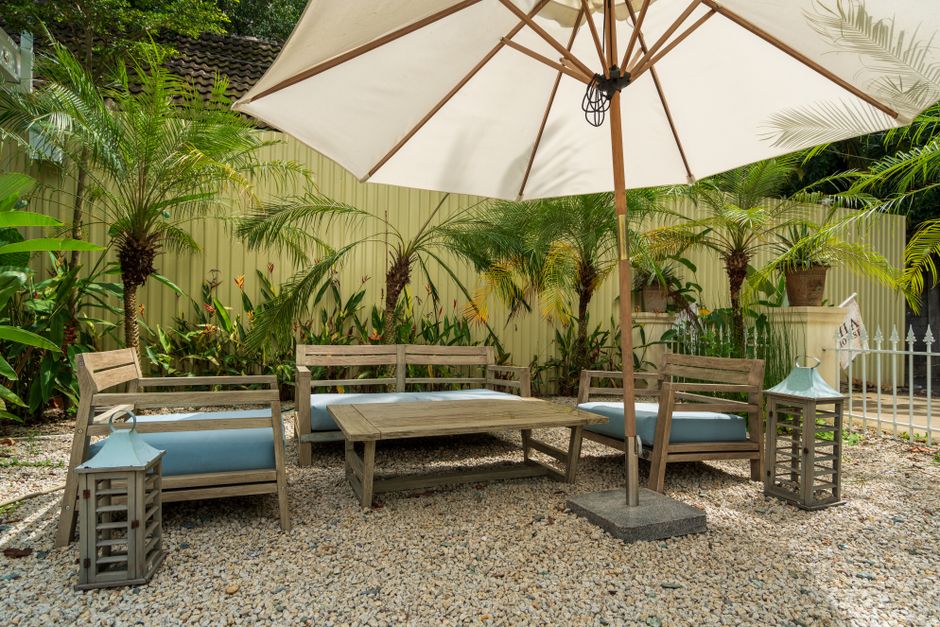
My strongest opinion: do not buy the biggest canopy that fits. Oversizing often creates a dark, damp corner and leaves no room for airflow or planting.
Mistake 1: Ignoring the late-afternoon angle
- A canopy that blocks noon sun may still leave the chairs exposed at 4 p.m.
- Fence shadows move quickly in July, so track the shadow line before fixing posts.
- Use a side screen only on the exposed western side; screening every side traps heat.
Mistake 2: Treating anchoring as an optional extra
Wind catches a large fabric roof like a sail. Do not rely on decorative pots, short stakes or loose paving slabs. Use rated ground anchors, secure bolts into sound masonry or a properly weighted base designed for the structure. Never attach a shade sail to a weak fence panel.
Mistake 3: Choosing plants for appearance alone
Large-leaved plants can look perfect at the nursery and fail in a hot corner if their pots dry out each afternoon. Check mature width, root depth and water needs. Keep containers a few inches away from a hot wall so air can move around them.
Mistake 4: Adding mist in humid weather
A misting fan feels useful in dry heat because evaporation removes heat from the moving air. In already humid weather, the mist mostly wets furniture, paving and foliage. A normal fan is the better buy in damp climates, and any electrical connection outdoors needs weather-rated equipment and ground-fault protection.
Which Cooling and Watering Products Earn Their Space?
Is the GARDENA AquaBloom worth buying for container plants?
Yes, for a shade corner filled with pots and no convenient tap. The GARDENA AquaBloom Water Reservoir Set is listed at $129.99 and includes a 2.77-gallon reservoir, solar-powered pump, 20 drip heads, 65 feet of tubing and 14 watering programs. It can support up to 20 plants for as long as 12 days under the maker’s stated conditions.
My verdict is clear: choose AquaBloom for a container-heavy retreat or holiday watering gap, not for an established border connected to a normal outdoor tap. Check the filter and tubing weekly because a blocked drip head can quietly kill one plant while the rest look healthy.
Does the RYOBI misting fan solve July heat?
The RYOBI 18V ONE+ Whisper Series 7.5-inch bucket-top misting fan is listed at $99 for the tool-only kit. It claims up to 14 feet of misting coverage, more than five hours of runtime and 840 feet per minute of air velocity. It is my pick for a dry-climate seating corner when the household already owns an 18V ONE+ battery.
Skip it if you live in a humid area, dislike wet surfaces or would need to buy the battery and charger as well. A standard plug-in outdoor fan can provide the useful airflow at a lower running cost when a safe outlet is already available.
What cooling feature should come first?
Buy shade before buying powered cooling. Shade removes the largest heat load, while a fan only improves comfort while it runs. The right order is overhead shade, pale ground treatment, cross ventilation, then a fan or irrigation system if the site still needs it.
My Final Shade Sanctuary Picks for a Hot July Corner
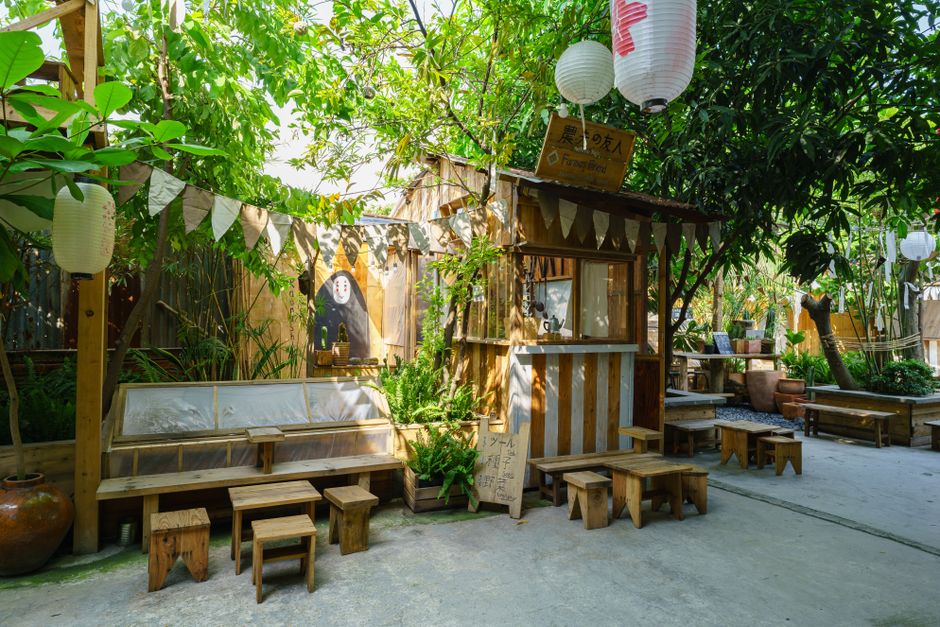
For most small gardens, the winning layout is an open-sided 8-by-10-foot or 10-by-10-foot shade zone, two comfortable chairs, one small table, pale paving or gravel, and a planted edge of ferns, heuchera and Japanese forest grass. Keep the center uncluttered so air can cross the space.
Choose the Zeus & Ruta gazebo when the project is temporary and privacy matters. Choose the Sojag Sanibel II when you own the property and want a fixed structure that feels like an outdoor room. Choose a Coolaroo shade sail when airflow and a narrow footprint matter more than curtains. Add GARDENA AquaBloom only when container watering is the real problem. Add the RYOBI misting fan only for dry heat and only when the battery cost makes sense.
Prices are benchmarks, not promises. Retail stock, local delivery, tax and seasonal sales can change the final bill. The sensible purchase is the one that solves the main discomfort without adding a new failure point.
| Your situation | Recommended choice | Why |
|---|---|---|
| Rental or seasonal corner | Zeus & Ruta 10-by-10-foot gazebo | Listed at $317.92 with curtains and a removable soft top |
| Permanent owned garden | Sojag Sanibel II | Aluminum frame and hardtop construction justify the higher listed price |
| Narrow site with strong airflow | Coolaroo shade sail | Open sides and up to 95 percent UV blocking in the planning material |
| Many containers or holiday absence | GARDENA AquaBloom | Reservoir, solar pump and 20 drip heads |
| Dry heat after shade is installed | RYOBI 18V ONE+ misting fan | 14-foot misting coverage and more than five hours of claimed runtime |