Composting for Beginners: A No-Nonsense Guide That Actually Works
Roughly 30% of what goes into a landfill bin is kitchen scraps and yard waste. You are paying to have fertilizer hauled away, then paying again to buy fertilizer in a plastic bag. The math is stupid.
Composting is not a hobby for retirees with perfect tomato plants. It is a way to stop wasting money. You do not need a farm. You do not need worms (unless you want them). You need a container, the right ratio, and about five minutes a week.
This guide cuts through the compost-gatekeeping. No 40-page theses on fungal succession. Just what works, what stinks, and what to buy if you want to start this week.
The Real Problem: You Think Compost Is Complicated
Most people give up on composting before they start because they read a blog that made it sound like a chemistry exam. Green this, brown that, turn it every Tuesday at 3 p.m. or it turns into toxic sludge.
Here is the truth: compost happens. Leaves rot. Banana peels rot. You are just giving rot a contained place to happen without attracting rats or smelling up your kitchen.
The only thing you can actually get wrong is the ratio and the moisture. Get those two mostly right, and you cannot fail. The pile will break down. It might take three months or six. It will happen.
What You Actually Need to Start
- A bin or a corner of the yard. That is it.
- A kitchen counter container with a lid. The OXO Good Grips compost bin ($22) has a charcoal filter that kills smell. Or use an old coffee can.
- Brown material: dead leaves, shredded cardboard, paper towels, sawdust.
- Green material: vegetable scraps, fruit peels, coffee grounds, grass clippings.
The bin matters less than you think. A $30 GEOBIN is a plastic sheet you stake into a circle. It works. The $300 Aerobin 400 insulates and self-aerates. It also works. The difference is convenience and speed, not success.
Green vs Brown: The Ratio That Stops the Stink
Every compost problem—smell, flies, slime, nothing breaking down—comes back to one thing: too much green, not enough brown.
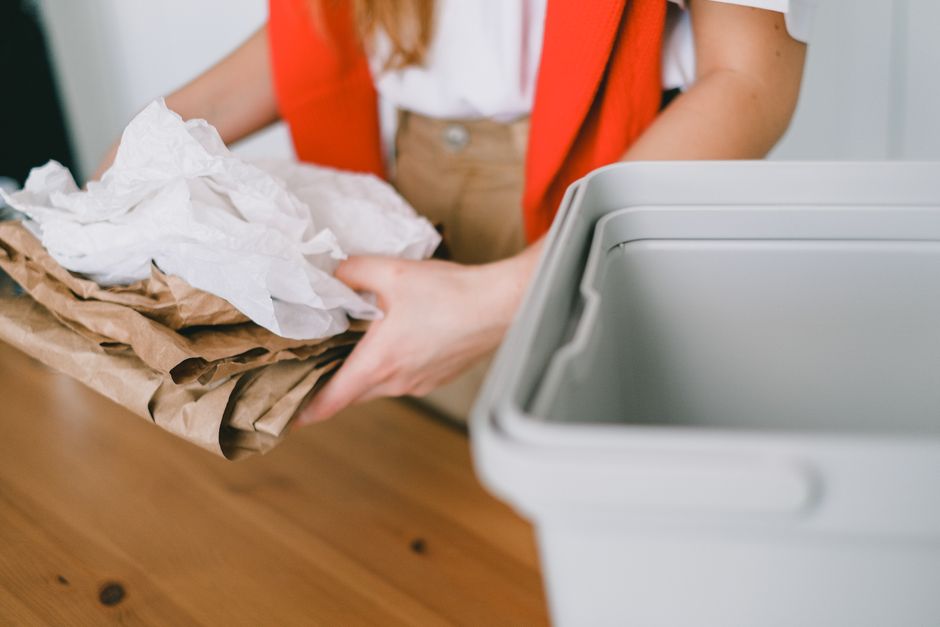
Green materials are nitrogen-heavy. Food scraps, fresh grass, coffee grounds. They are wet and decompose fast. Brown materials are carbon-heavy. Dead leaves, cardboard, straw, paper. They are dry and break down slow.
The ratio that works for most beginners is 2 to 3 parts brown for every 1 part green by volume. Not weight. Volume. A handful of food scraps gets covered by two or three handfuls of shredded cardboard or leaves.
What Goes In (And What Never Does)
| Throw It In | Keep It Out |
|---|---|
| Vegetable and fruit scraps | Meat, fish, bones |
| Coffee grounds and paper filters | Dairy products |
| Eggshells (crushed) | Oils and grease |
| Shredded cardboard and newspaper | Pet waste |
| Dead leaves and plant trimmings | Diseased plants |
| Grass clippings (thin layers) | Weeds with seed heads |
The meat and dairy ban is not about compost purity. It is about pests. Rats will dig through a pile for a chicken bone. They will not bother with lettuce.
Eggshells take forever to break down. Crush them first or throw them in a blender. Or just skip them—they are not doing much for your pile anyway.
Three Composting Methods Compared
You have three realistic options. Pick based on your space and how much effort you want to put in.
Cold composting is the lazy option. Throw stuff in a bin. Ignore it. Get compost in 6 to 12 months. No turning, no monitoring, no stress. The downside: it takes a year, and weed seeds survive because the pile never gets hot.
Hot composting is for people who want compost in 2 to 3 months. You need a pile at least 3 feet by 3 feet by 3 feet. You turn it every week with a pitchfork. The internal temperature hits 130-150°F, which kills weed seeds and pathogens. The Aerobin 400 ($300) does this without turning because of its internal aeration core.
Vermicomposting uses red wiggler worms to eat kitchen scraps. A Worm Factory 360 ($130) fits under a sink or in a laundry room. The worms eat about half their body weight per day. You get worm castings—the most nutrient-dense compost there is—in about 3 months. No turning, no smell, but you cannot throw in citrus, onions, or anything spicy.
Which One Should You Pick?
If you have a yard and do not care about speed: cold composting in a GEOBIN ($30) is the cheapest entry point.
If you want usable compost this season: hot composting in an Aerobin 400 or a simple pallet bin.
If you live in an apartment or want zero outdoor work: the Worm Factory 360 under the sink.
The Mistakes That Make People Quit
Composting has a high quit rate, and it is almost never because the process is hard. It is because of three specific, fixable mistakes.
Mistake One: The Pile Is Too Wet
A wet pile goes anaerobic. That is the rotten-egg smell that makes your neighbors hate you. The fix is simple: add brown material and turn the pile. If you can squeeze a handful of compost and water drips out, it is too wet. Add shredded cardboard or dead leaves and mix it in.
Mistake Two: The Pile Is Too Small
A pile smaller than 3 feet by 3 feet will not heat up. It will still break down, but slowly. If you want hot compost, you need mass. If you only have a small bin, accept that you are cold composting and adjust your timeline.
Mistake Three: You Never Turn It
Even cold compost needs oxygen. Without it, the bottom of the pile becomes a sludgy mess. Turn your pile once a month with a pitchfork. Ten minutes. That is the entire maintenance schedule.
What to Buy (And What to Skip)
The compost industry loves selling you gadgets. Most of them are unnecessary. Here is what actually earns its price.
- GEOBIN ($30): Cheap, expandable, works. The best starter bin.
- OXO Good Grips Compost Bin ($22): Countertop bin with a real charcoal filter. No smell, no fruit flies.
- Worm Factory 360 ($130): The standard for vermicomposting. Stackable trays make harvesting castings easy.
- Aerobin 400 ($300): Expensive, but the internal aeration core means you never turn it. Good if you have back problems or just hate effort.
- Compost thermometer ($15): Not essential, but useful for hot composting. The REOTEMP Backyard Compost Thermometer is the standard.
Skip the compost starter powders. They are just bacteria you already have in your yard. Skip the fancy turning tools—a $25 pitchfork does the job. Skip the compost tea brewers until you have been composting for at least a year.
When Not to Compost
Composting is not for everyone, and pretending otherwise is dishonest. If you live in a studio apartment with no balcony and no outdoor space, vermicomposting might work, but it might also be more than you want to manage. That is fine.
If you generate almost no food waste—you eat out constantly or buy pre-prepped meals—the input is too low to justify the setup. A countertop bin will sit empty for weeks.
If you rent and your landlord has already complained about your plants, an outdoor pile is going to be a fight. In that case, look into municipal composting programs. Many cities now offer curbside compost pickup. Use that instead of fighting a losing battle.
The Verdict: Start Stupid Simple
Back to that 30% of landfill waste. The average household throws out about 1.5 pounds of food scraps per day. That is over 500 pounds a year. You can turn all of it into soil for free.
The best beginner setup in 2026 is a GEOBIN in the corner of the yard, an OXO countertop bin in the kitchen, and a pile of dead leaves from last fall. Total cost: about $50. Total weekly effort: ten minutes.
Do not overthink it. The pile wants to break down. Your job is just to not stop it.

Recent Comments