Woodland Is In! RHS Chelsea Garden Ideas You Can Use
Trees — in all their forms from mature specimens to ornamental stumps — are the stars of many show gardens at this year’s RHS Chelsea Flower Show.
Create a patch of ‘woodland’ in a small urban garden
These show gardens are small compared to real gardens. So they demonstrate that you can create a patch of ‘woodland’ in the smallest area. That could give you privacy, help soften sound and it’s good for air pollution and wildlife.
And they were under-planted with soft, shade-loving plants like mosses, ferns, and hostas, mixed with cottage garden planting in the sunny spots.
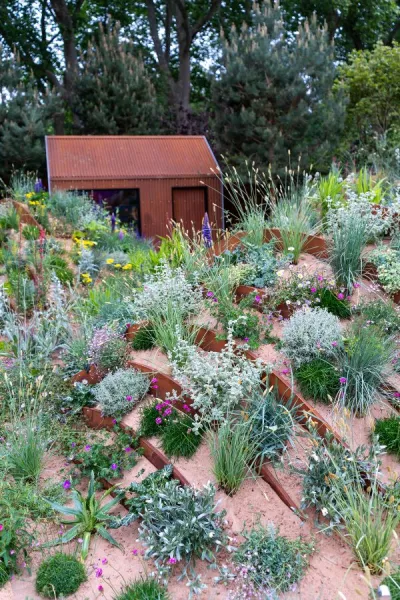
Designers chose trees with real character. Gnarled trunks, mature specimens, twisted branches — species like field maple, birch, and pine added texture and emotion to the designs. Pines were especially popular, either as mature sculptural trees (as in the Hospitalfields Arts Garden by Nigel Dunnett) or as low, rounded, cloud-like shapes.
And multi-stemmed trees, especially silver birches, are a classic show garden element. That’s because they work well in small spaces. Multi-stemmed trees let in dappled light and don’t grow as tall. So definitely one of those tips that work equally well in both show gardens and real gardens!
Or you can remove the lower branches of a large tree to create more light and room for planting underneath.
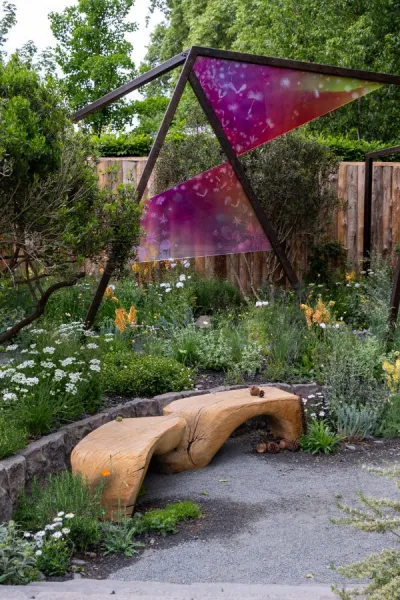
Logs and tree stumps as ornaments add to the woodland feel, along with wooden furniture.
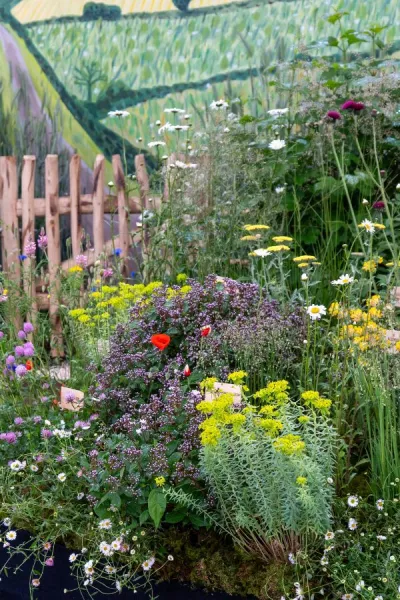
The planting itself ranged from woodland edge style planting – the mosses, hostas and ferns – to a cottage garden effect with roses, wildflowers and ‘pioneer species.’ These gardens were very pretty!
RHS Chelsea 2025 – the new ‘managed’ re-wilding
This year, re-wilding feels softer with rainforest, woodland, or dune-like landscapes. And it wasn’t the raw, untamed and untidy rewilding we’ve seen in recent years. This version is more managed and more colourful.
Shade is often considered a ‘problem area’. But all gardens have shade and many are almost all shady. These woodland plantings show that shade is beautiful. It’s wildlife friendly and relaxing to live with.
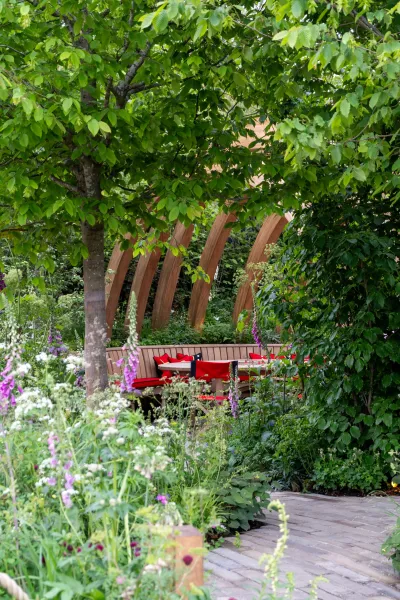
The Wildlife Trusts’ British Rainforest Garden by Zoe Claymore used silver birches, mosses, ferns, and lichened boughs to re-create a British rainforest garden. This landscape once covered a fifth of the UK!
Key style points to copy here are the wooden walkway which helps protect the soil and underplanting.
This garden also used wood and logs as decorative elements in the garden, as did several other show gardens at RHS Chelsea 2025. Think beyond flowers — bark, rocks, moss, and logs add structure and interest.
Relax about the lawn – have it short, longer or a mix
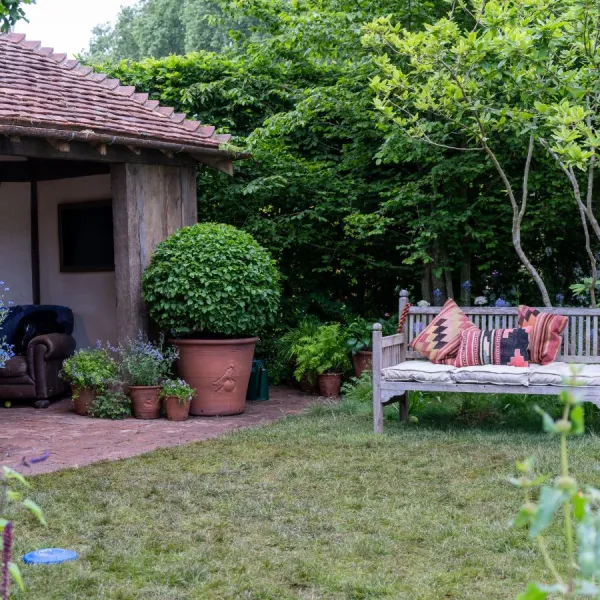
The RHS and BBC Radio 2 Dog Garden by Monty Don and Jamie Butterworth was a garden that felt homely and relaxed. It was also outstandingly pretty.
At its heart was a small square of clipped lawn. But it’s not perfect lawn – it has wild lawn plants like Plantago and daisies. Dogs, according to Monty, like short lawns for rolling on and slightly longer grasses for exploring.
That’s a good lawn principle for both people and wildlife.A shorter lawn is easier to walk on or play on and it makes a lovely contrast to planting. Then on the edges and nearer the trees, the lawn is longer.
A very easy tip to pick up for your own garden!
They used mature field maples, mosses, and wild lawn plants like Plantago and Rumex.
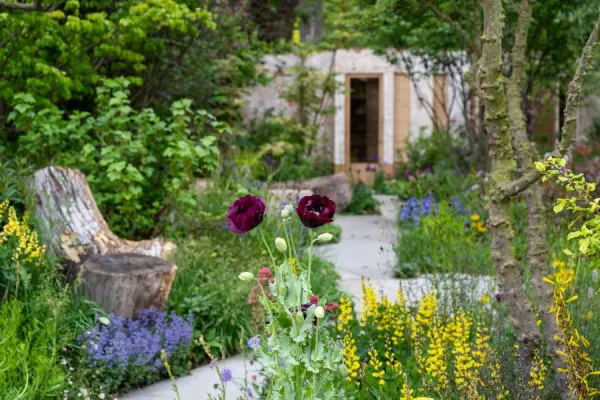
This garden shows that shady areas are just as beautiful as the sunny ones. Naturalistic – but colourful – planting and a rocky pool gave a soft woodland-edge atmosphere.
When you’ve planted a tree, look after it for the first few years!
RHS Chelsea 2025 could almost be called a homage to the urban tree. But the Avanade Intelligent Garden by Tom Massey and Je Ahn was created because 60% of urban trees fail to survive.
That’s because because they’re not looked after properly in their first few years. Above all, a young tree needs thorough, regular watering in its first few years until its roots are deep enough to access the water deeper down in the soil.
Avanade Intelligent Garden is described as an ‘urban forest garden’ and used AI to help the trees “talk” to gardeners through an app, requesting the care they need. The planting mimicked a resilient forest ecosystem.
Love your shade – think ‘woodland palette’ and ferns!
Ferns were everywhere at RHS Chelsea 2025. They’re the basis for a textured, architectural shade ‘woodland’ planting, along with hostas and mosses.
(Note: so many gardens also featured moss! It’s no longer something you ‘get rid of’, but a biodiverse and beautiful element in the garden.)
Other shade loving plants include tiarellas, and pulmonarias are ideal for dappled light. Mix them for contrast in leaf shape and colour.
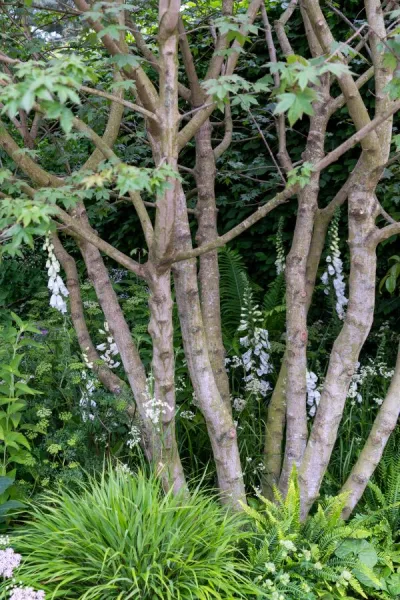

Then add pretty, cottage garden planting with wildflowers and roses!
A green, textured planting on the shady side of the garden is the perfect foil for a sunny patch full of flowers.
In past years, show gardens often tried to have brilliant flowers all round a show garden. But no garden is full sun all round! Especially if you live in an urban environment, you will have at least one area of full shade and most of the rest of the garden will be part shade. But you may also have a patch of full sun and that’s the perfect spot for some floral contrast.
Many gardens contrasted their shaded woodland planting with an edge of pretty wildflower or cottage garden planting. One of the very prettiest was Jo Thompson’s The Glasshouse Garden.
It supported the Glasshouse, a charity helping women prisoners through horticulture. River birch trees and ferns created a woodland glade, opening out into beautiful borders of roses and astrantia.
Pine trees at RHS Chelsea 2025 – resilient and sculptural
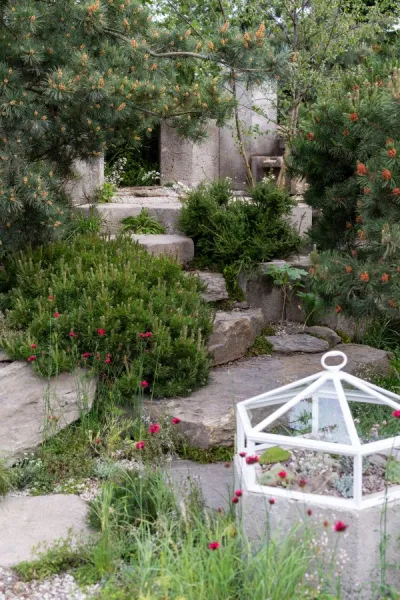
I saw pine trees in several gardens. Pines are evergreen but their branching shape means they’re less solid than many other conifers. Their cones also look like candles on a candelabra, so they have a striking shape.
And they’re a very resilient tree across a wide range of climates, although they don’t like sitting in prolonged wet soil.
You can get low growing pines as ground cover or big tall ones and prune the lower branches back to create light and planting space at a lower level.
The Down’s Syndrome Scotland Garden, which had a semi-woodland design with river birch, Scots pine, and pretty, naturalistic flowers.
Happy Reading!
