How to plant and grow tulips for a stunning display
If you want dramatic garden colour in spring, then you have to grow tulips.
And they are easy to grow.
They don’t always come back the following year the way many other bulbs do, so you may have to re-plant them every year. But they are so beautiful that they are worth it.
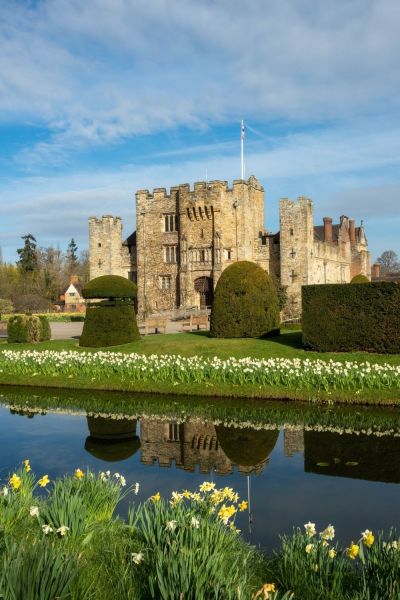
So I went to Hever Castle to talk to head gardener, Neil Miller, about how to grow tulips. Hever Castle has a Festival of Tulips every spring, so Neil has grown hundreds of thousands of tulips in his time!
I also talked to Sue Oriel, who planted 2,500 tulips in three standard raised beds for her niece’s wedding.
Sue runs Country Lane Flowers with her business partner Stephanie Bates. They grow flowers for bouquets and events in their gardens, growing in domestic-sized borders entirely with the seasons. ‘We grow entirely with natural light and warmth,’ says Sue. There are no polytunnels or extra heat or light, and all plants are grown from seeds, bulbs or cuttings in the garden.
So although growing flowers is her business, she grows tulips like many home gardeners.
How to choose tulips
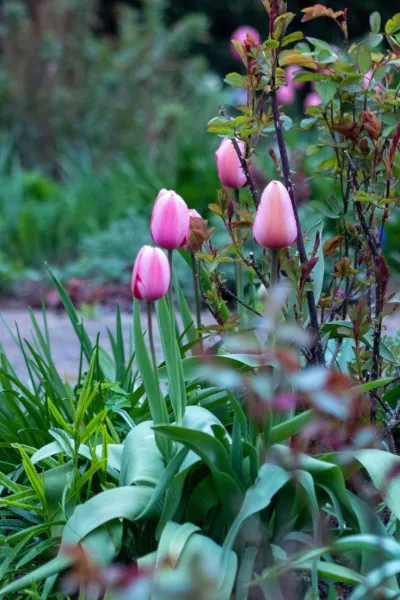
Although, obviously, colour is the first thing you think about when choosing tulips, Neil suggests that you also think about the height. ‘Think about where you’ll be planting the tulips and how the heights compare.’
For example, it can be better to choose shorter tulips for pots if they’re in exposed positions, because they’ll be blown about the wind.
Otherwise, it really is just a question of what you like.
Insider tips on where to plant tulips
It’s also a good idea to plant some tulips in sunny spots and others in shadier borders.
The tulips in the sun will come out first (and probably will go over quite quickly). The tulips in the shade will come out later and last longer. ‘So you get a good progression,’ says Neil.
Neil likes to plant tulips in blocks of the same type and color together – he thinks they have more impact en masse.
If you live in a colder or hotter area, that will change where you plant tulips. If you garden in the more northerly parts of Britain or North America, you’ll need to plant most of your tulips in full sun.
But if your winters rarely freeze and your summers are regularly 30C/86F and above, you’ll need to plant your tulips in partial shade or it will be too hot for them.
And if your climate is usually hotter than that – don’t grow tulips!
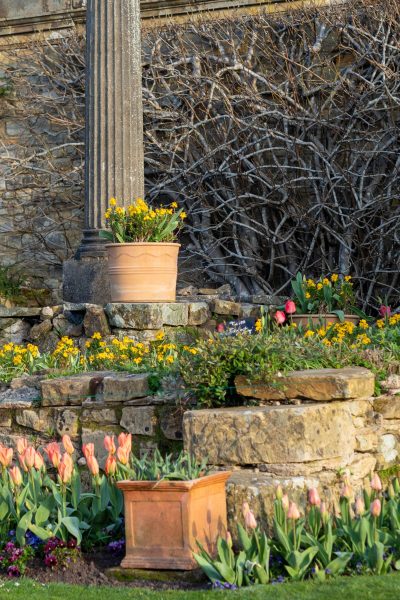
Sue also prefers big blocks of high impact tulips. ‘I don’t plant in threes, fives and sevens,’ she says. ‘I plant in thirteens, fifteens and seventeens.’
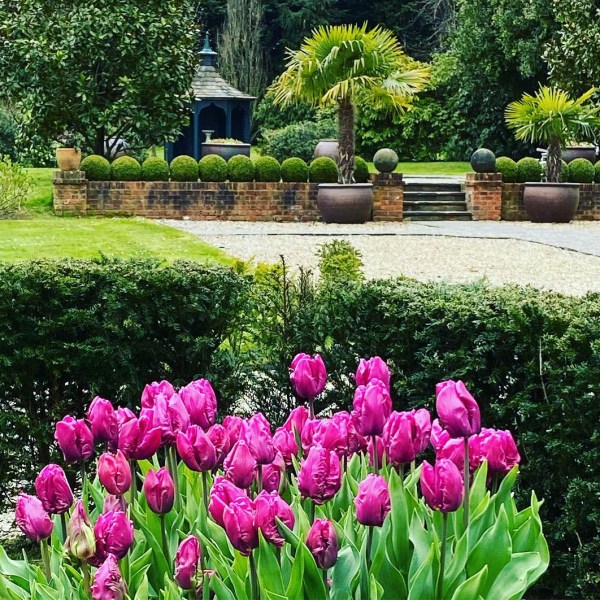
Which plants go well with tulips
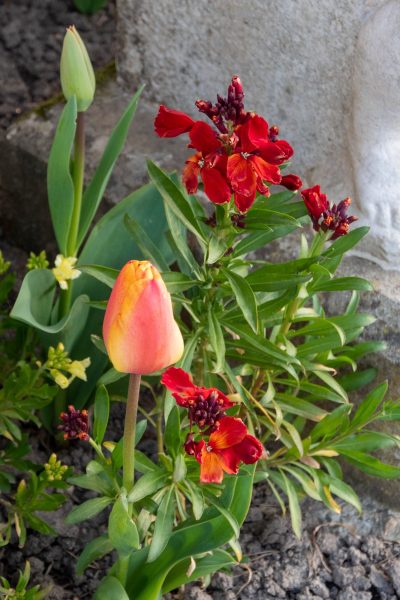
- Wallflowers
- Euphorbia
- Heuchera
- Forget-me-nots (Mysotis)
- Violas
- Evergreens with contrasting foliage
- Plants with pretty emerging foliage, such as roses or peonies.
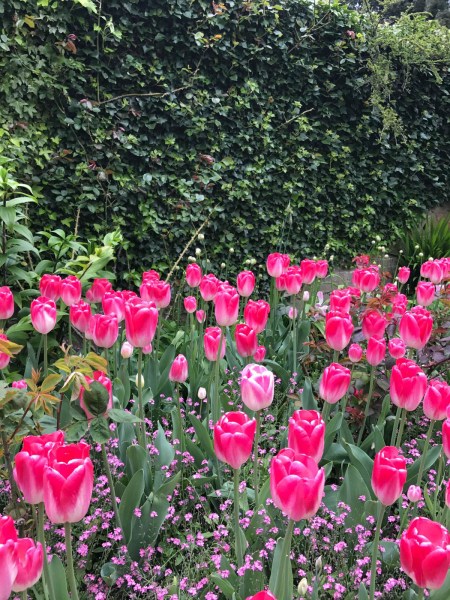
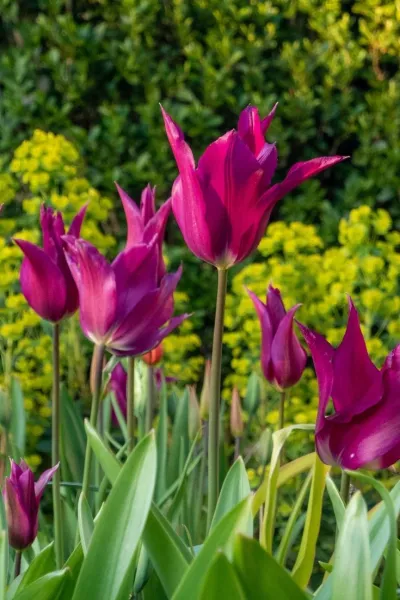
At Hever Castle, there are a number of displays where tulips are combined with either violas or wallflowers. Heuchera are another good partner for tulips.
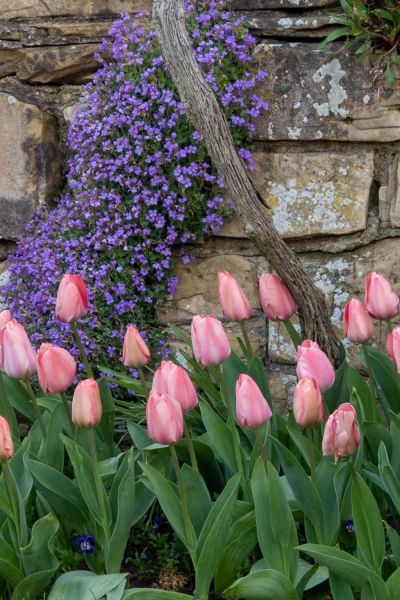
Grow tulips with perennials and shrubs
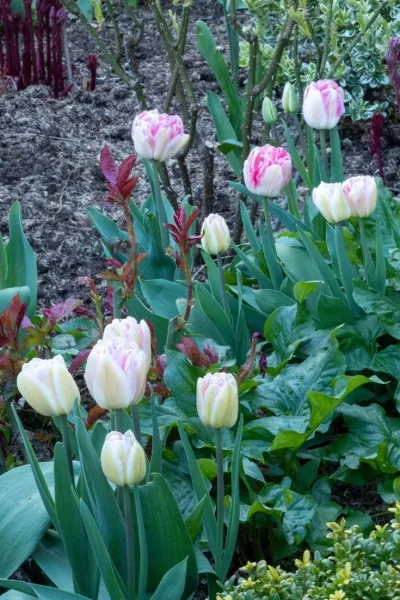
You can also grow tulips in herbaceous borders to add colour. As the emerging leaves of perennials begin to cover the soil, tulips add splashes of brightness.
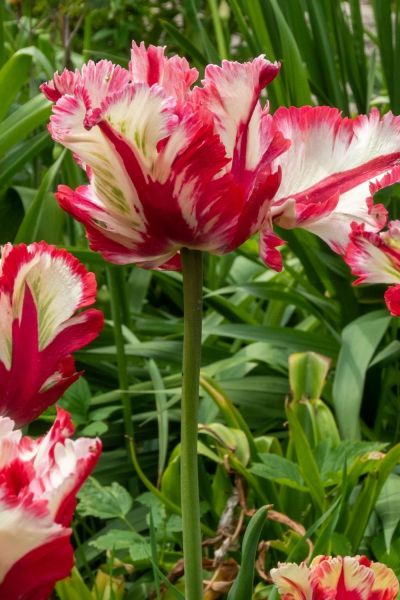
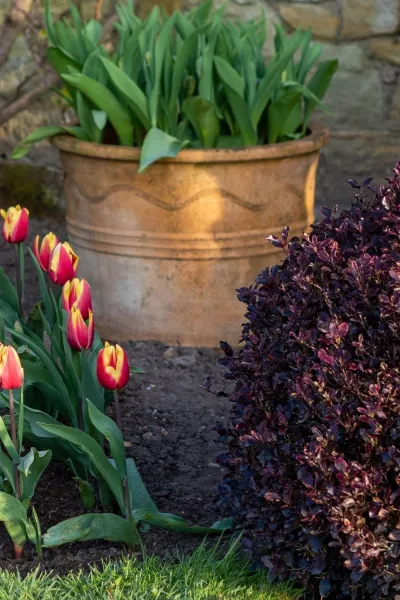
Neil has also considered the evergreen shrubs when choosing tulip colour. I particularly like this combination of dark copper Pittosporum ‘Tom Thumb’ with the bright carnival stripes of Abu Hassan tulips.
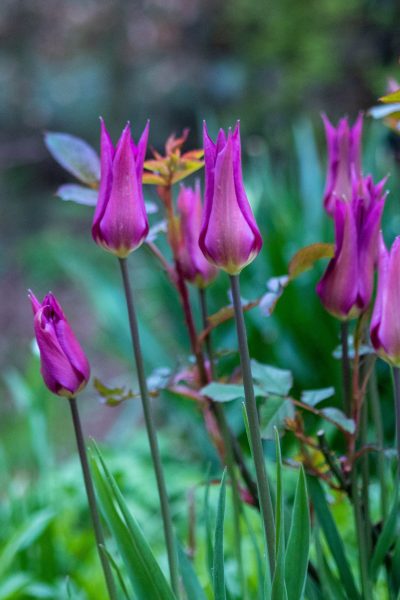
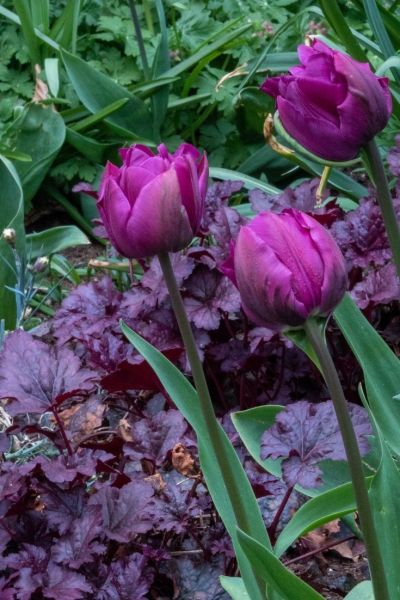
How to grow tulips in pots
Neil says that it’s better to grow tulips in terracotta pots than in plastic ones, because plastic ones get hotter in sunshine and colder in frost.
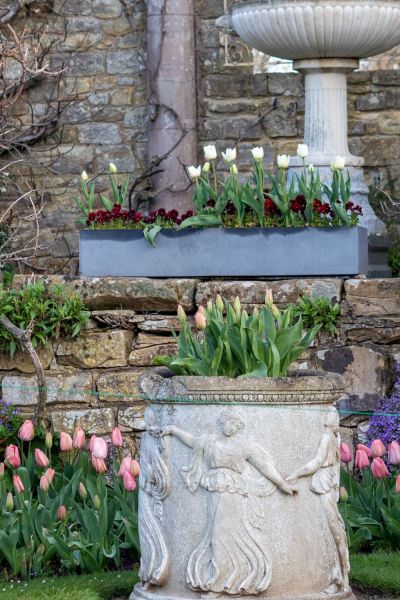
There are wonderful pots and troughs at Hever Castle, all planted up with tulips as you can see from these pictures.
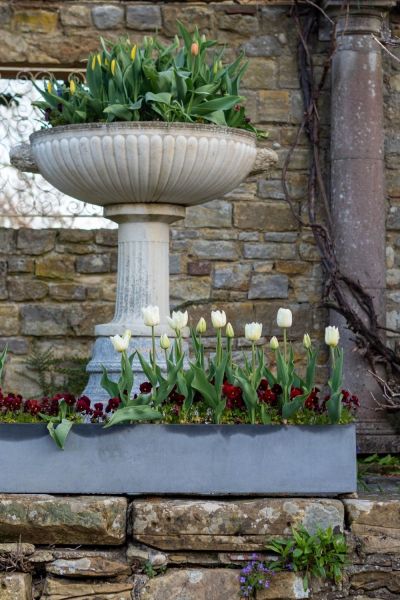
‘Put some chicken wire over the pots to keep squirrels from digging the bulbs up and eating them,’ says Neil. ‘You can take the chicken wire away as soon as the tulips start to shoot as squirrels don’t eat the bulbs at that stage.
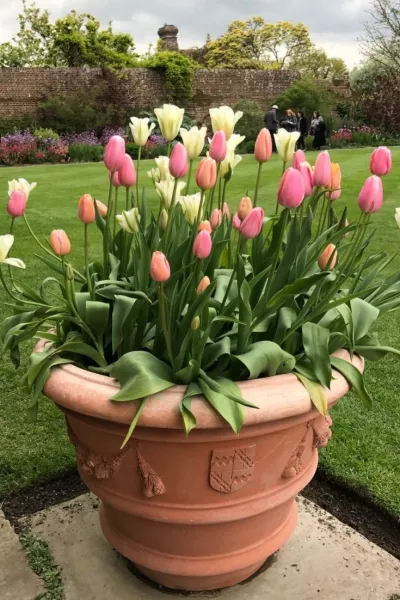
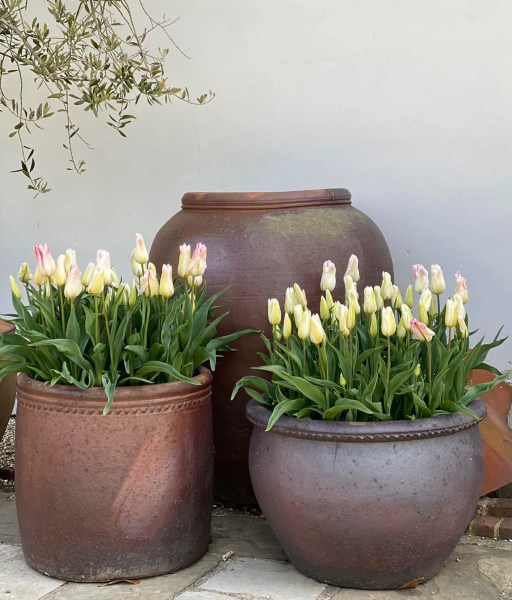
If you live in an area with very damp soil, it’s better to plant your tulips in pots. Tulips don’t like wet conditions! If it’s too damp, your tulips will rot.
It’s difficult to change the nature of your soil. Use compost and well rotted garden manure regularly to improve the soil, but if it’s fundamentally damp, you can’t change that.
You can create a brilliant border-like impact with container planting. Don’t miss How To Group Pots with its gorgeous displays of tulips in pots.
How deep do you plant tulip bulbs?
At Hever Castle, Neil plants tulip bulbs at a depth of about three times the height of the bulb.
You can plant bulbs more deeply.
When I went to a flower growing workshop at Sarah Raven, she advised us to plant tulips at 12″ deep if we wanted them to come back – even as deep as 12″. That was over ten years ago. I planted a group of Ballerina tulips at 12″ deep and they still come back year after year.
However ‘Ballerina’ are generally considered good tulips for ‘coming back’ anyway.
Planting tulips at 12″ deep protects them from being eaten by squirrels and other wildlife. It can also protect them from freezing weather.
But if you rarely get freezing weather, then shallow planting (at 2x height) will probably be best as it is cooler nearer the surface. Tulips like to have a bout of cold before they get growing.
Plant bulbs with the pointy bit facing upwards. It’s as simple as that.
What should you add to the bulb planting hole?
You don’t need to add anything.
Many people recommend adding fertilizer when you plant bulbs. It’s not necessary. The bulbs already have everything they need to flower this year in the bulb itself.
They don’t need any additional nutrients until their flowers are over. Then they will start to create next year’s flowers.
Any fertilizer you add to the soil in winter will mainly have washed away by then.
All you can do is keep your soil in good condition. This should mean that you can minimise your use of fertilizers generally.
Tulips prefer well drained soil, so you’ll also see suggestions for improving drainage.
But flower grower Sue says: ‘Don’t add any grit or gravel for drainage. That’s now considered to be very old-fashioned advice and it can create space under the tulip where water can puddle.’
It’s better to plant your tulips in pots rather than try to change your soil.
What month should you plant tulip bulbs?
Plant tulips later than other spring bulbs. It will vary according to where you live.
At Hever Castle, they plant them in November, but many people in the UK leave it until December or even January.
A friend planted my tulips for me at Christmas one year, while I was cooking the turkey! But if you’re in the Northern USA or Canada, plant your tulips once night-time temperatures have dropped below around 5C/40F.
So those in colder climates should plant their bulbs earlier.
Ulting Wick, a garden in Essex which opens for the National Garden Scheme, is famous for its tulips. Philippa Burroughs and the head gardener plant around 12,000 tulips in January. ‘As long as they’re all in by the end of January, that’s fine by us,’ says Phillipa.
The UK climate in winter roughly equates to a USDA zone 8 or 9. (Not in summer, though!)
If you live in an area with mild winters, such as Southern Australia or USDA zones 9 and above, you’re advised to store your tulip bulbs in the refrigerator for a few weeks before planting and to plant them in late winter.
How to stop squirrels from digging up your tulips
Squirrels love tulips. ‘They’re like caviar to squirrels,’ says Neil.
At Hever Castle, they did some tests on what would stop squirrels from digging up their bulbs. ‘We found a mix of chilli powder and garlic powder, lightly sprinkled on top of the soil just after planting really did stop squirrels from digging up our bulbs,’ he says.
If you are planting tulips in pots cover the pots with chicken wire. Remove the chicken wire once the tulips start to shoot, as the squirrels will no longer be interested.
And planting bulbs 12″ deep should also help.
How far apart to plant tulip bulbs?
The standard advice is to plant bulbs 4″-6″ apart.
But you can also plant them closer.
As Sue is trying to grow as many tulips as possible, she dug out the whole flower bed to about 6″ (the same as Neil’s 3x the size of the bulb). They then added feed and garden compost before laying the bulbs out. ‘I plant around 100-200 bulbs in a square metre,’ she says.
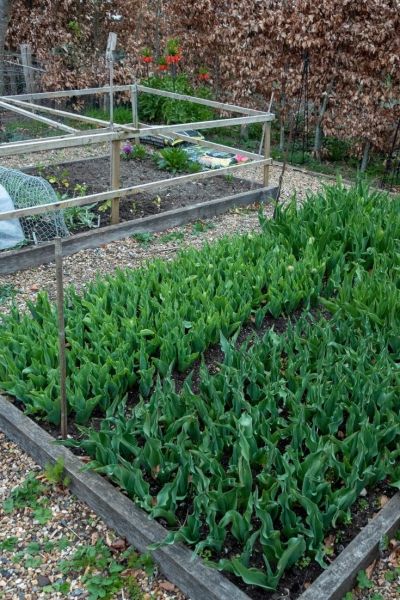
But only choose the best bulbs. ‘Don’t try to grow tulips that are slightly mouldy or not full size. Their flowers will be disappointing.’
‘We place them closer together than the manufacturers recommend,’ she says. ‘We leave about a tulip bulb’s distance between each tulip bulb. And it’s very important to avoid the tulips touching each other.’
Then she covers the bulbs with soil and garden compost, mixed with some more feed. ‘That was in November.’
Sue hasn’t had to care for her tulips over winter, but once the leaves began to emerge, she watered them in dry periods. ‘I could see that their leaves were looking a bit more shrunken than usual, which can mean lack of moisture, ‘ she said. As they’re planted so close together, they would be competing with each other for water.
They perked up once they’d been watered.
Do tulips come back year after year?
Neil says it’s important to dead head the tulips if you want flowers next year. However, he says that many tulips really only flower best in their first year. That’s why so many people dig them up and replace them year after year.
However, sometimes tulips do come back. As well as the Ballerina tulips, I also have some Queen of Night that have come back over many years, and some yellow ones planted by my predecessors over 20 years ago.
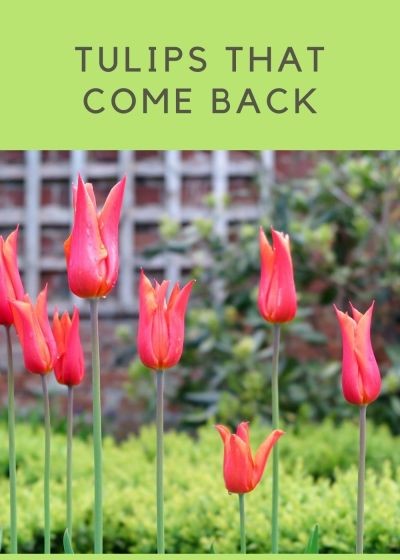
If you want tulips to come back, Neil also advises feeding them with an all-purpose fertiliser or tomato feed.
And make sure you don’t cut back any foliage until it has died. It will then come away in your hand, leaving the bulb in the ground.
However, tulips are prone to rot and to diseases such as tulip fire. If you want the gorgeousness and glory of tulips in your garden, it’s best to replant them every year. You can even plant them in pots, then wedge the pots in borders.
As a cut flower grower, Sue doesn’t cut the tulip off the bulb in the ground. She harvests tulips by digging up the whole bulb, with the flower attached. ‘You can then wrap it in newspaper and keep it in the fridge for a few days, and only cut it when you want to put it in a vase.’
A locally grown tulip, dug up like this, will last in a vase for up to two weeks, she says. But supermarket flowers that have been flown and chilled for a long period of time after being cut away from the bulb ‘are effectively dead already,’ she says.
So they won’t last as long in the vase.
But before tulips, there are daffodils…
If you’re planning your spring garden, you’ll want to start with daffodils. I sometimes think we forget how much they lift our spirits after winter.
